1924 Nobel Prize in Literature
Reason for Award
for his great national epic, "The Peasants"
Laureates
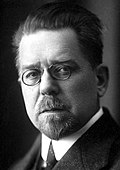
 Poland
Explanation
Mr. Reymont wrote a story about people living in the Polish countryside for one whole year. The book is split into four parts—Spring, Summer, Autumn and Winter—and shows farming, festivals, family happiness and quarrels in lively detail. Just like remembering a school trip to fields or forests, the village scenes appear clearly in your mind when you read. Every character works hard and lives together with nature. Mr. Reymont described all this in gentle yet powerful words.
Related Keywords
The Peasants
"The Peasants" is Reymont’s magnum opus, a multi-volume novel structured around the four seasons. While meticulously depicting rural lifestyles, it exposes human desire and solidarity through conflicts over land ownership and marriage. The writing was informed by thorough field research, faithfully reproducing dialects and folk rituals. The narrative functions as an ensemble piece in which the entire community is the protagonist, exploring the interaction between individuals and the collective from multiple angles. In literary history it is regarded as the pinnacle of Polish naturalism and a classic example of the rural epic in world literature.
Polish literature
Polish literature has evolved under diverse linguistic and cultural influences, from the medieval epic "Master of Wieliczka" to the 20th-century poetry of Wisława Szymborska. During the 18th and 19th-century partitions, literature served as a guardian of national consciousness in the absence of a sovereign state. Romanticism was embodied by Adam Mickiewicz, while Positivism found representation in Bolesław Prus; Reymont forged his own brand of realism at the intersection of these movements. A hallmark is the coexistence of social critique and spirituality, with a long tradition of émigré writing and underground publishing as forms of resistance. In the contemporary era, Nobel laureate Olga Tokarczuk has gained global recognition through postmodern narrative strategies.
Naturalism
Naturalism, theorized by Émile Zola in late-19th-century France, emphasized depicting society and human beings through a scientific, determinist lens. Environment and heredity are posited as the key behavioral determinants, and detailed observation exposes class disparities and labor issues. In Poland the movement focused less on urban industrial workers and more on peasants, with "The Peasants" representing its mature expression. Although naturalism was later overshadowed by expressionism and modernism, its precise realist techniques were inherited by subsequent generations. The movement also influenced theatre and painting, becoming a major current that traversed late-19th-century European culture.
Rural society
Rural society is a community whose structure centers on agriculture, land, communal bonds and seasonal rituals. Before industrialization a majority of Europeans belonged to such communities, which underwent rapid transformation during modernization. Land tenure systems also served to maintain social estates, making inheritance and marriage pivotal mechanisms of social reproduction. Oral culture and ritual remained strong, with stories and songs functioning as mnemonic media due to low literacy. Literary depictions of the countryside fulfill a dual role of nostalgia and social critique, presenting urban readers with both familiarity and alterity.
National epic
A national epic is a literary genre that poetically synthesizes a nation’s historical experience and spiritual values. Homer’s "Odyssey" and Adam Mickiewicz’s "Pan Tadeusz" are classic models. From the 19th century onward, prose novels could also perform the epic function, required to combine social totality with symbolism. "The Peasants," though written in prose, was praised for crystallizing a national self-image through its community-as-protagonist structure. As the core of cultural identity, national epics are employed in education and political propaganda, and their influence persists across generations.