1926 Nobel Prize in Literature
Reason for Award
for her idealistically inspired writings which with plastic clarity picture the life on her native island and with depth and sympathy deal with human problems in general
Laureates
 Italy
Italy
Explanation
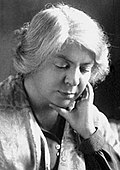
Grazia Deledda grew up on Sardinia, a large Mediterranean island that belongs to Italy. She wrote stories in words so clear that they feel like pictures, describing the people and nature of the island. Her tales show feelings we all know—caring for family, facing sadness, and finding courage. When you read them, you can almost feel the island’s wind and smell its bread, even if you have never been there. Deledda did not go to big schools; instead, she read many books by herself and practiced writing every day. Her effort and kind stories touched readers around the world and earned her the Nobel Prize in Literature. Her books remind us that caring for others is important, no matter where or when we live.
Related Keywords
Sardinia
Sardinia is the second-largest island in the Mediterranean and is famous for its prehistoric Nuragic monuments. Most of Deledda’s novels are set in the island’s mountainous pastoral regions, making landscape and culture the backbone of her narratives. Local dialects and folk rituals function as markers of regional identity within the texts. In literary studies, Sardinia serves as a case study for examining the concept of “internal colonization.” Ecocritical approaches also reassess her nature descriptions as textual demonstrations of the interdependence between humans and their environment.
Verismo (Italian Naturalism)
Verismo was an Italian naturalist movement of the late nineteenth century that emphasized positivist observation and the depiction of social issues. Deledda adopted Verismo’s techniques to portray rural poverty and traditional customs while superimposing poetic and symbolic layers. This hybridization endowed a psychological depth that rigid naturalism often lacked. Compared with French naturalism, Verismo retained a sharper sensitivity to questions of religion and morality, a trait evident in Deledda’s work. Today, Verismo is being reassessed as an essential framework for understanding the diversity of modern Italian literature.
Patriarchy
Patriarchy denotes a system in which men monopolize authority within family and society. In rural Sardinia, fathers and elders controlled property and honor, restricting the actions of women and younger people. Deledda’s narratives generate dramatic tension by displaying protagonists torn between patriarchal constraints and personal desires. Such portrayals place gender oppression within its historical context and supply valuable material for contemporary gender studies. By critically depicting patriarchy, her works invite readers to perceive institutional oppression and the need for its transformation.
Oral tradition
Oral tradition refers to stories, songs, and proverbs transmitted by word of mouth rather than writing. In Sardinia, festival songs, laments, and legends have preserved communal history and values. Deledda incorporates these oral elements into her novels, letting ancient voices resonate within the text. The technique creates an experimental collage effect, linking her work to modernist textual strategies. Inserting oral tradition introduces an oral rhythm and polyphony into literacy-centered literature, enriching the reader’s experience.
Christian sense of atonement
A sense of atonement is the religious feeling of seeking God’s forgiveness for one’s sins. In Sardinia’s strongly Catholic context, personal ethics and communal norms are closely tied to Church doctrine. Deledda’s characters, after committing transgressions, seek inner purification through prayer, sacrifice, or self-renunciation. Such psychological treatments provide valuable material for the sociology of religion and psychological criticism. The act of atonement drives the narrative structure and simultaneously highlights both human frailty and the possibility of redemption.
Social status of women writers
Between the late nineteenth and early twentieth centuries in Italy, professional authorship by women was exceptional. Limited educational opportunities and patriarchal values marginalized female creative activity. Deledda secured publication through self-education and persistent submissions, forging a precedent for international recognition. Her success opened a path to social acceptance for contemporary and later women writers. Gender history studies analyze her career as a key case of breaking the “glass ceiling” in the literary world.