1930 Nobel Prize in Literature
Reason for Award
for his vigorous and graphic art of description and his ability to create, with wit and humour, new types of characters
Laureates
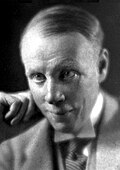
 United States of America
Explanation
Sinclair Lewis was an author who wrote stories. He showed everyday people living in small American towns in a lively way. He described their happiness and troubles so clearly that it feels like watching a movie. He also added jokes and gentle teasing, which makes reading fun. Because of this unique style, he became the first American to win the Nobel Prize in Literature. The prize said he created “new types of characters” with wit and humour.
Related Keywords
satire
Satire is a literary and artistic device that exposes social or personal contradictions through laughter and irony. In Lewis’s novels, exaggerating a character’s behavior makes readers notice underlying absurdities. In “Babbitt,” for instance, repeated scenes of the hero’s compulsive shopping lay bare the emptiness of consumer culture. Satire’s aim is not mere mockery; it seeks to destabilize rigid values and spark change. The Nobel Committee thus regarded Lewis’s humour as an energizing force that created “new types of characters.”
middle class
The middle class occupies the societal core, marked by relative economic security and active consumption. In 1920s America, automobiles and home appliances fueled its rapid expansion. Lewis closely observed this group’s lifestyle and distilled a composite “average American” in his fiction. Scenes involving home loans or rotary clubs symbolize aspirations for upward mobility and pressures to conform. Contemporary sociology and cultural-studies scholars still quote these passages as primary material.
realism
Realism is a literary movement aiming to depict reality without idealization, established in late-19th-century Europe. Lewis employed meticulous geographic detail and colloquial dialogue to make fictional towns feel authentic. The method lets readers empathize with characters while retaining critical distance. Unlike some contemporaries, his realism is cushioned by humour. This balance underlies the Nobel citation’s phrase “vigorous and graphic art of description.”
small-town America
Small-town America denotes provincial cities of a few thousand to tens of thousands of residents, an imaginative wellspring of U.S. culture. Lewis’s Gopher Prairie and Zenith City are semi-fictional models of this urban type. Conservative communal norms, face-to-face economic networks, and suspicion of outsiders are recurrent themes. Such portrayals inform today’s debates on rural revitalization and populism. The ability to experience small-town dynamics vicariously makes his novels transnational references.
American cultural criticism
American cultural criticism analyzes and evaluates U.S. culture through literature, film, and other media. Lewis was a pioneering critic who dismantled self-congratulatory national myths and exposed contradictions. His cutting gaze is compared to concepts like “self-colonization” and “internal orientalism.” The approach was inherited by writers such as Ralph Ellison and Thomas Pynchon. Literary scholars now recast Lewis as an early cultural critic, reframing the conceptual history of American studies.