1933 Nobel Prize in Literature
Reason for Award
for the strict artistry with which he has carried on the classical Russian traditions in prose writing
Laureates
 Russian Federation
Explanation
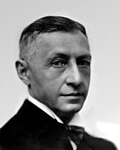
Ivan Bunin was a storyteller born in Russia more than 100 years ago. He wrote about villages, forests, and ordinary people with words that feel as vivid as a painting. When people read his books, they often say they can almost smell the earth and hear the wind in the fields. The Nobel Prize in Literature is one of the most famous awards in the world of books. In 1933 Bunin became the first writer in the Russian language to receive this honor. Reading his stories is like taking a trip to a distant land and time.
Related Keywords
Russian literature
Russian literature achieved worldwide recognition in the 19th century through writers such as Tolstoy, Dostoevsky, and Turgenev, who combined social issues with philosophical inquiry. Their works offered profound insights into the human condition. By the early 20th century Symbolism and avant-garde movements diversified literary expression. Positioned within this transition, Bunin preserved 19th-century classical forms while carving an individual niche through poetic language and sensory detail. Broadly defined, Russian literature—including émigré writing—maintains linguistic and cultural continuity despite historical ruptures and continues to influence world letters today.
prose
Prose is a form of language that lacks metrical structure, offering a free mode of expression. Novels, essays, and histories all belong to this category. In 19th-century Russia prose emerged alongside poetry as a central vehicle of artistic communication, with Tolstoy’s epics and Chekhov’s short stories setting global standards. Bunin demonstrated advanced craftsmanship in the short-story subset, balancing concision with a poetic resonance. Because prose can directly address everyday realities, it plays a crucial role in both social commentary and psychological exploration.
short story
A short story typically spans a few thousand to several tens of thousands of words and delivers strong impact by focusing on limited characters and events. In Russia, starting with Pushkin’s Tales of Belkin, the genre served as a laboratory for literary innovation. Chekhov elevated the form through his snapshots of quotidian life; Bunin followed by fusing sensory precision with psychological depth. Owing to its compact design, the short story often relies on symbolism and implication, encouraging active interpretation. Today the genre aligns well with magazines and online platforms and frequently acts as a gateway for emerging writers.
émigré writer
An émigré writer is an author who leaves their homeland for political or social reasons and continues creative work abroad. After the Russian Revolution many intellectuals relocated to Western Europe, forming literary communities in Berlin and Paris. Bunin moved to France in 1918 and produced numerous short stories in Grasse in the south. Exile demands preservation of linguistic identity while negotiating foreign cultures, infusing texts with complex nostalgia and irony. Émigré literature offers perspectives that transcend national borders and informs contemporary diaspora studies.
nature description
Nature description is a technique that portrays landscapes, seasons, and flora or fauna in detail to reinforce a story’s mood or themes. In Bunin’s works the changing seasons and rural scenery resonate with characters’ inner states, enhancing lyricism. While 19th-century realism often used nature as a metaphor for social conditions, Bunin foregrounded sensory experience itself, employing imagery that activates all five senses. Vivid nature passages immerse readers and enable emotional connection across cultural and temporal boundaries. From an eco-literary perspective, nature description prompts reconsideration of the interplay between human beings and their environments.