1936 Nobel Prize in Literature
Reason for Award
for the power, honesty and deep-felt emotions of his dramatic works, which embody an original concept of tragedy
Laureates
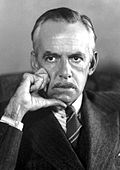
 United States of America
Explanation
Eugene O'Neill was a person who writes plays, called a playwright. He created stories about families and sailors, showing human sadness and happiness honestly. His characters make mistakes and tell lies, yet they try hard to live their lives. Audiences watch them and start thinking about their own feelings. Because he chose simple, heartfelt words instead of difficult ones, his plays touched people all over the world. That is why he received the Nobel Prize in Literature for his great contribution.
Related Keywords
Modern American drama
Modern American drama refers to the theatrical current in the United States beginning in the early twentieth century. It marked a shift from nineteenth-century melodrama to plays that emphasized social issues and psychological depth. Eugene O'Neill stood at the center of this transformation, blending realism with symbolism. Successors such as Tennessee Williams and Arthur Miller expanded the techniques O'Neill had pioneered. Modern American drama became a medium through which the distinctive history, culture, and linguistic rhythms of the United States were shared internationally.
Expressionism
Expressionism is an early-twentieth-century artistic movement that emphasizes inner emotion and subjectivity over realistic depiction. In theatre it employs abstract sets, exaggerated gestures, and stark lighting to visualize the psychological world. O'Neill's plays such as "The Hairy Ape" and "The Iceman Cometh" use expressionist devices to portray workers' alienation and survival instincts. The technique delivers strong sensory impact to audiences, conveying the play's message directly to the heart. It remains a powerful tool in experimental theatre and visual media today for externalizing emotion.
Tragedy
Tragedy is a dramatic form in which characters are brought to ruin by inevitable fate or inherent flaws, originating in ancient Greece. O'Neill democratized tragedy by making ordinary people, not royalty, his protagonists. In his plays, internal conflict of characters serves as a more important driving force than external events. Consequently, audiences experience the stage as a mirror confronting their own weaknesses. O'Neill's innovative conception of tragedy greatly influenced world theatre after the twentieth century.
Long Day's Journey into Night
"Long Day's Journey into Night" is O'Neill's magnum opus, premiered posthumously in 1956. Set on a single day in 1912, the play portrays the struggles of four family members modeled on O'Neill's own relatives. Morphine addiction, alcoholism, illness, and financial anxiety are depicted with stark realism, eliciting deep empathy and pain from audiences. Its meticulous psychological portraiture and poetic dialogue earned the 1957 Pulitzer Prize for Drama. The play is considered one of the most important English-language dramas of the twentieth century and is continually performed worldwide.
Psychological realism
Psychological realism is a literary and theatrical technique that meticulously depicts characters' internal processes to facilitate audience empathy. O'Neill suggested even unconscious motivations through precise character description and dialogue nuance. As a result, audiences could vicariously experience complex emotions as their own. Psychological realism widely influenced twentieth-century novels and films, raising the standard of storytelling. The approach remains central to modern method acting and script analysis.