1937 Nobel Prize in Literature
Reason for Award
for the artistic power and truth with which he has depicted human conflict as well as some fundamental aspects of contemporary life in his novel-cycle "Les Thibault"
Laureates
 France
Explanation
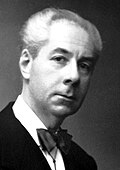
Roger Martin du Gard was a French writer. He wrote a long story called “Les Thibault” about a family who love, quarrel, and make peace again. In the book we see how children feel at school when opinions clash and how frightening it is when war approaches. By watching the characters, readers can imagine what they would do in the same situation. The author uses clear conversations and actions instead of difficult words to show feelings, so we feel as if we were living with the family. This strong storytelling earned him the Nobel Prize in Literature.
Related Keywords
Les Thibault
An eight-volume novel written between 1905 and 1940 by Martin du Gard. It traces how the middle-class Thibault family, mainly the brothers Antoine and Jacques, is drawn into World War I. Diaries, letters, and other mixed genres intertwine so that private life and public events unfold side by side. The inclusion of documentary sources blends fiction with factual record in a distinctive structure. Considered a paradigmatic “roman-fleuve,” it remains a key text in 20th-century literary studies.
social realism
A method in literature and art that portrays social and economic realities objectively, often focusing on poverty, labor conditions, and political injustice. Martin du Gard consulted official records and medical statistics to show the gap between bourgeois families and the working class. He avoids melodramatic exaggeration, revealing structural issues through actions and dialogue. His approach links 19th-century French Naturalism and Russian realism to 20th-century narratives of social critique.
family saga
A narrative form that centers on the history of a family over several generations, mirroring societal change. “Les Thibault” is a classic example, showing clashing values through brothers, parents, children, and relatives. The form easily interweaves private emotions with public events, and its length allows close tracking of evolving relationships. Frequently compared with works like “Buddenbrooks” or “One Hundred Years of Solitude,” the family saga serves as a lens for reading macro-history through a microcosm.
pacifism
A doctrine that rejects violence and war, seeking to resolve conflicts by peaceful means. In “Les Thibault,” the younger brother Jacques gravitates toward anti-war activism and struggles with whether to obey the state’s mobilization orders. The novel probes ethical questions of pacifism by portraying clashes between personal conscience and governmental power during the onset of World War I. Martin du Gard himself participated in inter-war peace movements, influencing his writing. The theme resonates with contemporary debates on international politics and humanitarian law.
World War I
A large-scale war from 1914 to 1918 in which about ten million soldiers died, mainly in Europe. Industrialized weaponry and total-war mobilization drastically altered social structures. The latter part of “Les Thibault” portrays mobilization, front-line horrors, and anti-war activism in detail, making war’s impact on individual lives visible. The work also serves as a literary document of the French Third Republic’s political process and domestic opinion splits. In war-literature studies, it ranks alongside Remarque and Barbusse as a key text.