1939 Nobel Prize in Literature
Reason for Award
for his deep understanding of his country's peasantry and the exquisite art with which he has portrayed their way of life and their relationship with Nature
Laureates
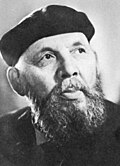
 Finland
Explanation
Sillanpää was a writer who made Finnish farm families the heroes of his stories. He described how they lived with the sun, the forest and the snow in simple, gentle words. When you read his books you find scenes like milking cows or picking berries—experiences that feel like a school field-trip. His stories teach us to value family, friendship and the need to care for nature. Through his books you can imagine Finland’s four seasons, village festivals and the quiet of long winter nights. It feels as if you have taken a trip to the far-north countryside.
Related Keywords
peasant literature
Peasant literature focuses on the lives, labor and beliefs of rural people. Sillanpää’s novels are a Nordic flagship of the genre, documenting seasonal work and communal customs in fine detail. By giving voice to primary-sector workers during times of social upheaval, he rendered rural realities visible to urban audiences. His texts also serve as valuable ethnographic records, preserving folk rituals and oral traditions in literary form. Historians later mined these depictions almost like primary sources. Today the genre is being re-examined as a cultural archive relevant to regional revitalization and food security discussions.
naturalism
Naturalism, emerging in the late 19th century, sought to depict humans as products of biological and social determinism. Sillanpää inherited Zola’s observational rigor, situating characters under the sway of external conditions to expose limits of free will. Yet he deviated by infusing nature with religious and spiritual dimensions rather than viewing it as a neutral force. Climate and soil thus infiltrate psychological portraiture, allowing for a geo-literary reading. His brand of naturalism is now hailed by ecocritics as an early case where the environment itself speaks as an agent.
Finnish Civil War
The Finnish Civil War of 1918 split the young nation into Red (labor) and White (conservative) factions. Sillanpää’s “Meek Heritage” takes this event as its backdrop, portraying the collision of personal faith and state ideology. Rejecting victor-centric narratives, he reveals the tragedy through the eyes of peasant soldiers. Although controversial at first publication, the novel was later reassessed as a literary testimony fostering reconciliation and understanding. It is now frequently cited in peace studies and trauma research.
forest and nature perception
In Finnish culture the forest is both a material resource and a spiritual symbol. Sillanpää sets many scenes in woodland and layers the rustling of trees with characters’ inner monologues. Because his prose records not only visuals but also sounds and smells, readers experience the environment with all five senses. Literary aesthetics scholars label this approach “sensory landscape depiction.” Writing on the eve of large-scale deforestation, he emphasized human-forest interdependence, showing remarkable foresight. Today his passages are sometimes used in environmental education to present a multifaceted view of forests.
psychological depiction
Sillanpää’s fiction is marked by minute psychological tracking of characters through sensory detail. By using interior monologue and free indirect discourse, he aligns the flow of consciousness with seasonal or weather changes, turning chronological time into psychological rhythm. This technique invites comparison with Proust or Woolf, yet in his case harmony with nature is pivotal. Through such depiction, the oppressions, hopes and reverence for nature experienced by peasants are rendered three-dimensionally. Consequently, readers grasp not only socioeconomic conditions but also the ecology of emotions.