1948 Nobel Prize in Literature
Reason for Award
for his outstanding, pioneer contribution to present-day poetry
Laureates
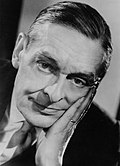
 United Kingdom of Great Britain and Northern Ireland
Explanation
Thomas Stearns Eliot was a poet born more than 100 years ago. In works like “The Waste Land” he expressed the worries and hopes of his time through rhythm and playful language. Before him, poetry often kept strict rhyme and meter, but Eliot freely arranged words and mixed many languages and stories. It is like inventing a new instrument and creating exciting melodies in music. His new style encouraged writers around the world to think, “I can write like this, too!” That bold spirit was honored with the Nobel Prize in Literature in 1948.
Related Keywords
Modernism
Modernism was the early-20th-century cultural movement that dismantled traditional forms and sought new modes of expression. Eliot stood at its core, and “The Waste Land” is often cited as the quintessential Modernist poem. Fragmentary structure, collage-like quotation, and multilingual texture exemplify key Modernist techniques. His criticism supplied the movement with theoretical justification and radiated influence across other arts. Understanding Eliot therefore requires situating him within the Modernist frame.
The Waste Land
Published in 1922, this long poem portrays spiritual desolation and the quest for renewal in the aftermath of World War I. Structured in five sections, it weaves quotations ranging from myth and scripture to popular songs. In the annotated edition Eliot lists his sources, creating a meta-text that invites scholarly exploration. Ezra Pound cut nearly one-third of the draft, sharpening its rhythmic intensity and fragmentation. It remains one of the most analyzed texts in 20th-century literature and a touchstone for critical theory.
Objective Correlative
The Objective Correlative is Eliot’s critical term for evoking emotion not by stating it but by presenting a chain of objects, situations, or events that arouse the desired feeling in the audience. Popularized through his essay on Shakespeare’s “Hamlet,” it was adopted by playwrights such as Shaw and O’Neill. In cinema it aligns with montage techniques, evident in the suspense of Hitchcock films. New Critics valued it as a measure of a poem’s functional unity. It remains a staple concept in creative-writing pedagogy today.
Four Quartets
Written between 1936 and 1942, this quartet of long poems offers musical meditations on time, history, and spirituality. Each poem is named after a seasonally associated locale and uses elemental symbolism and recurring refrains to form a cyclic structure. The language is plainer than in “The Waste Land,” yet the theological and philosophical depth is greater, marking Eliot’s late style. First delivered as wartime radio talks, the poems provided listeners with comfort and moral guidance. Scholarship often explores their interplay between text and musical form, prompting new views on the poetry-music relationship.
Mythic Method
Coined for the creative technique used by writers like James Joyce and Eliot, the Mythic Method aligns a classical mythic framework with contemporary narrative to illuminate meaning. In “The Waste Land,” the Grail legend and the Fisher King myth are overlaid on modern urban decay, creating historical resonance. Formally it operates through repetition and variation, serving as a device to suggest timeless universality. The method influenced many Modernist texts—for example, Faulkner’s “Light in August.” It intersects with comparative mythology and structuralist criticism, becoming a cornerstone for narrative pattern studies.
Literary Criticism
Eliot was not only a poet but also an outstanding critic, writing essays such as “Tradition and the Individual Talent” and “The Three Voices of Poetry.” He evaluated literature through both historical continuity and technical innovation, advocating a reciprocal development of poetry and criticism. This stance catalyzed theories like New Criticism and shaped later critical movements. The Nobel committee cited his critical work alongside his poetry. Eliot’s criticism remains a staple of university curricula and serves as a foundational framework for textual analysis today.