1950 Nobel Prize in Literature
Reason for Award
in recognition of his varied and significant writings in which he champions humanitarian ideals and freedom of thought
Laureates
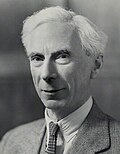
 United Kingdom of Great Britain and Northern Ireland
Explanation
Bertrand Russell was a writer who wanted everyone to think freely and live happily. He explained difficult math and philosophy in ways that people could understand, and he spoke out against war, asking people to solve problems by talking instead of fighting. It is like telling classmates to listen to each other’s feelings when they quarrel. Russell’s books give hints for thinking not only to adults but also to children. The Nobel Prize in Literature honored him because his caring words reached and inspired people all over the world.
Related Keywords
Humanitarianism
Humanitarianism is the value system that puts the welfare and dignity of all people first. Russell criticized war and tyranny and demanded social institutions that protect the vulnerable. This attitude permeates popular works such as Power and The Conquest of Happiness. One reason he received the Nobel Prize was that this humanitarian concern runs through both his scholarly and everyday essays. Humanitarianism remains a central ideal in modern international human-rights law and UN activities.
Freedom of thought
Freedom of thought is the right to hold and express one’s own ideas without coercion. Russell defended this right even after being expelled from university posts and imprisoned. In his lecture 'Roads to Freedom' he warned against the state or church controlling the individual mind. The same concern applies directly to freedom of speech in the Internet age. Russell argued that safeguarding freedom of thought is essential for the progress of science and art.
Analytic philosophy
Analytic philosophy is a movement that clarifies complex issues through the analysis of language and logic. Russell was central to its early development, introducing the theory of descriptions and logical atomism. His method combines the rigor of mathematics and science with careful attention to everyday language. Much of contemporary philosophy of language and mind stands in the lineage from Russell to Wittgenstein and Quine. The analytic approach is also applied as a technique for making public-policy debates clearer.
Russell's paradox
Russell’s paradox shows that the 'set of all sets that are not members of themselves' leads to contradiction in naive set theory. The discovery shook the foundations of then-flourishing set theory and forced mathematicians to re-examine consistency. To avoid the paradox, type theory and Zermelo–Fraenkel set theory were developed. Modern programming-language type systems still draw lessons from this episode. Although the Nobel Prize in Literature is not a science award, Russell’s philosophical insight and its lucid presentation were seen as literary merits.
Principia Mathematica
Principia Mathematica is the three-volume work published between 1910 and 1913 by Russell and Whitehead, aiming to reduce mathematics to logic. Through massive symbolic derivations it deduced the basic theorems of arithmetic, demonstrating the power of formal systems. The approach paved the way for Hilbert’s program and Gödel’s later incompleteness theorems. Although not a literary work, its intricate structure of over 1,000 pages is valued as an intellectual edifice of aesthetic significance. The cross-disciplinary influence extends to computation theory, AI, and linguistics.
Nuclear disarmament movement
During the Cold War’s massive nuclear build-up, Russell felt a strong responsibility as a scientist and joined Einstein in demanding nuclear abolition. Their 1955 Russell–Einstein Manifesto urged governments to choose dialogue for the sake of humanity’s survival. It led to the Pugwash Conferences of Scientists, which later won the Nobel Peace Prize. The nuclear disarmament movement continues today and has influenced the UN Treaty on the Prohibition of Nuclear Weapons. Russell’s literary prose translated complex military issues into language that ordinary citizens could grasp and act upon.