1951 Nobel Prize in Literature
Reason for Award
for the artistic vigour and true independence of mind with which he endeavours in his poetry to find answers to the eternal questions confronting mankind
Laureates
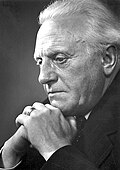
 Sweden
Explanation
Pär Lagerkvist used poems and stories to ask big questions such as “Why do people live?” and “What is the difference between good and evil?” He wrote in simple, powerful language so even young readers can feel the emotions. He described the sadness of war or the loneliness of being alone with short but vivid words. His works teach us to think with our own minds and speak with our own voices, even when everyone else says the same thing. Because of that, people all over the world still read his books and feel encouraged to think for themselves.
Related Keywords
artistic vigour
A key phrase in the Nobel citation, signifying creative energy. Lagerkvist infused strong emotion and tension into a highly economical style, stimulating the reader’s imagination. This vigour broke the post-World-War-I literary stagnation and injected fresh air into Nordic letters. Coupled with his pared-down diction, the unspoken gaps generate a dynamic movement in the text. His approach later influenced minimalist literature.
independence of mind
The stance of judging according to one’s own conscience and reason rather than conforming to external authority. Lagerkvist resisted wartime censorship and propaganda, refusing to let his treatments of religion or power be co-opted by ideology. This attitude is mirrored in the recurrent figure of the solitary protagonist. Readers, confronted with such independence, are prompted to examine their own ethics. The concept resonates with contemporary media-literacy education.
eternal questions
Fundamental problems humanity has pondered since antiquity—where we come from, where we are going, and what constitutes good. Lagerkvist re-posed these issues by reinterpreting historical events and biblical anecdotes in modern contexts. By withholding direct answers, his narratives invite participatory reader reflection. Consequently, the works attain timeless universality and have been translated into many languages. The approach aligns closely with existentialist literature.
allegory
A storytelling technique that conveys truths through symbolic characters or events rather than direct depiction. Lagerkvist employed animals or minor historical figures to expose human nature. Allegory allows multivalent interpretation; meaning shifts with the reader’s cultural context, making it suitable for international audiences. By avoiding moralistic preaching, it stimulates an internal dialogue within the reader. The form influenced political fiction throughout the 20th century.
“Barabbas”
A landmark 1950 novel focusing on the thief Barabbas, who was pardoned in place of Jesus. By inverting the biblical anecdote, it examines faith from the perspective of doubt. Its concise style and vivid imagery offer a compelling portrait of a man oscillating between redemption and despair. Translated into more than forty languages and adapted into a 1961 film, the book strongly influenced the Nobel Committee’s decision.
20th-century Swedish literature
A diverse literary movement in the Swedish-language sphere during the 1900s, ranging from August Strindberg to Astrid Lindgren. Developing alongside the rise of social democracy and the welfare-state model, many works interrogated both individual psychology and social structures. Lagerkvist occupied a unique position by handling religious-philosophical themes within modernist techniques. His success increased global awareness of Swedish literature and paved the way for later authors to be published abroad. The corpus remains a crucial subject in translation studies and comparative Nordic literature.