1952 Nobel Prize in Literature
Reason for Award
for the deep spiritual insight and the artistic intensity with which he has in his novels penetrated the drama of human life
Laureates
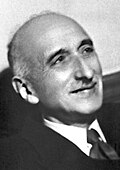
 France
Explanation
François Mauriac turned the joys and sorrows that happen inside people’s hearts into stories called novels. He carefully wrote about feelings we all know—like the awkwardness after arguing with a friend or the warmth of caring for family. Readers feel, “That is exactly how I feel.” This gentle yet powerful writing was honored with the world-famous literature prize. Mauriac was a French author, and many of his stories take place in French towns and villages.
Related Keywords
Catholic literature
A literary trend from the late 19th to 20th centuries that weaves Christian doctrine and experience of faith into narrative. Mauriac is a key representative, depicting the tension between belief and secular life and focusing the climax on the Catholic core of ‘sin and grace.’ His method influenced international writers like Graham Greene and Cioran, restoring religious depth to modern literature. Readers are led to reconsider ethics and spirituality through characters’ processes of interior redemption. Such works act as cultural instruments that reintroduce faith’s significance into increasingly secular societies.
existentialism
A 20th-century philosophical movement emphasizing individual freedom, choice, and responsibility. Although not an existentialist per se, Mauriac often stages characters torn between free will and ethical burden, intersecting Sartrean questions with theological perspectives. This vividly presents the conflict between a believing subject and a secular subject, forcing readers to examine the basis of their own existence. The existential motif intensifies narrative tension through dialogue with atheistic positions. Consequently, his work offers a notable case where religious literature and secular philosophy converge.
sin and redemption
A core concept in Mauriac’s oeuvre, juxtaposing human transgression (sin) with the spiritual transformation that overcomes it (redemption). Characters frequently commit morally or socially forbidden acts and then seek possibilities of atonement. Catholic doctrines of ‘confession’ and ‘grace’ become narrative turning points, provoking ethical judgment and emotional resonance in readers. The dialectic of sin and redemption visualizes interior drama that modern rationalism struggles to grasp. While universal in world literature, Mauriac deepened the theme with distinctive spiritual intensity.
20th-century French literature
An era in French literary history where diverse currents—from post-World War I avant-garde to existentialism and the Nouveau Roman—intersected. Mauriac retained traditional narrative techniques while fusing psychological analysis with religiosity, carving a unique niche. Juxtaposing him with contemporaries like Proust and Camus reveals a shared concern for multilayered representation of inner life. His works combine conservative and innovative elements, showcasing literature’s wide potential. They thus serve as a guide to the complex landscape of 20th-century French letters.
interior monologue
A narrative technique that directly depicts a character’s inner thoughts—one hallmark of 20th-century fiction. Mauriac smoothly alternates between the narrator’s voice and the protagonist’s monologue, allowing readers to follow mental currents. Consequently, motives and conflicts, rather than external actions, drive the plot. Technically he combines free indirect discourse and temporal ellipsis to mirror the fragmented structure of consciousness. Such deepened interior representation extends literature into a field of psychological and philosophical inquiry.