1954 Nobel Prize in Literature
Reason for Award
for his mastery of the art of narrative, most recently demonstrated in The Old Man and the Sea, and for the influence that he has exerted on contemporary style
Laureates
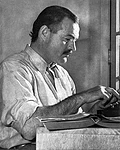
 United States of America
Explanation
Hemingway is a master storyteller, and he is especially famous for his book The Old Man and the Sea. In it, an old fisherman battles a huge fish using clear and simple words. Even young readers can picture the smell of the sea and the sound of the waves. The story teaches us that it is important not to give up and to keep trying. Because of this powerful way of telling stories, Hemingway received the Nobel Prize in Literature.
Related Keywords
art of narrative
The art of narrative refers to the entire craft of how a story is told. It encompasses plot structure, point of view, and manipulation of time. Hemingway revolutionized it by chaining short sentences and minimizing description. He left room for the reader’s interpretation, sharing emotion through silence between lines. This approach later influenced screenwriting and creative nonfiction.
The Old Man and the Sea
This 1952 novella portrays the epic battle between the aged fisherman Santiago and a giant marlin. Its simple diction and maritime realism were widely praised. Through biblical symbols and the struggle with nature, it addresses human dignity and perseverance. At publication it became a beacon of hope for post-war America. It was a central work cited by the Nobel Committee.
Iceberg Theory
Hemingway’s creative principle hides most of a story beneath the surface, leaving it to the reader’s imagination. Only observable facts remain on the textual surface while emotions and backstory are omitted. This increases polysemy and rewards rereading with new interpretations. It influenced minimalist fiction and New Journalism. Literary theory often cites it as an example of "absent signification."
Modernist literature
A literary movement at the turn of the 19th to 20th centuries that rejected traditional realism and searched for new forms. Stream of consciousness, fragmented plots, and temporal leaps are hallmarks. Hemingway inherited modernism’s concision yet forged a unique realistic style. His popularity helped modernist techniques reach mass audiences. Scholars view him as a bridge toward later post-modern literature.
Lost Generation
A group of American writers active mainly in Paris after World War I. Their works reflect disillusionment and shifting values caused by the war. Hemingway, F. Scott Fitzgerald, and Gertrude Stein are key figures. Their writings laid the foundation of modern American literature and shaped the United States’ cultural image abroad. "Lost" refers less to the people themselves than to the loss of prior moral certainties.