1955 Nobel Prize in Literature
Reason for Award
for his vivid epic power which has renewed the great narrative art of Iceland
Laureates
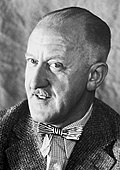
 Iceland
Explanation
Mr. Laxness was an author who turned the lives and nature of Iceland into big stories. He wrote about people living under volcanoes and glaciers with colorful words that feel like picture-book language. Even long novels became easy to read, and he breathed new life into the old Icelandic legends called “sagas.” When you read his books you can almost see the distant landscape and hear the wind, so readers all over the world were moved. For this wonderful storytelling he received the important Nobel Prize in Literature.
Related Keywords
Icelandic literature
The body of writing in Icelandic, ranging from medieval sagas to contemporary novels. Despite Iceland’s small population, it has a unique epic tradition and strong oral culture, and Laxness exemplifies both continuity and innovation within it. His Nobel win triggered global interest in Icelandic letters. Scholarship explores how geographic isolation shapes narrative and compares Icelandic texts with broader Nordic literatures.
Epic
A poetic or narrative form that recounts historical or national themes on a grand scale. Laxness employed epic structures within modern novels, positioning personal stories as mirrors of nation and history. Thus he reinterpreted the scale of classical sagas through a 20th-century sensibility. The epic viewpoint evokes collective memory and helps redefine national culture.
Saga
A corpus of Icelandic prose narratives written around the 13th century, depicting family histories and voyages with a concise, report-like style. Laxness references saga economy of description and heroic archetypes while adding psychological depth and social critique. This synthesis places his work at the intersection of saga studies and modernist literary analysis.
Social realism
A literary-artistic movement portraying social inequality and working-class life with documentary precision. Laxness candidly depicts debt-ridden farmers and widening economic gaps, revealing the darker side of Iceland’s rapid modernization. His focus on dignity and solidarity transcends partisan politics. The reformist impulse aligns him with global realism currents of the early 20th century.
National identity
The shared sense of history, language, and culture that unites a people. Under Danish rule in the 19th century, images of independent farmers and saga heroes were key to Icelandic identity. Through his protagonists, Laxness exposes the gap between such ideals and reality, suggesting new national self-images. His work exemplifies literature’s role in forging national consciousness.
Independent farmer
The self-reliant, freedom-loving farmer archetype embodied by Bjartur in “Independent People.” The erosion of this ideal under debt systems and unequal land ownership symbolizes the breakdown of tradition during modernization. Character analysis connects with economic history and rural sociology, enriching Icelandic countryside studies.
North Atlantic culture
A concept denoting shared history, language, and livelihoods among North Atlantic islands such as Iceland, Greenland, and the Faroes. Fishing, sheep-herding, and adaptation to harsh climates form the backdrop, and Laxness’ novels express both the isolation and solidarity characteristic of the region. The term is significant in environmental humanities as well.
Modernization
The transformation of social structures through industrialization, urbanization, and market penetration. Early 20th-century Iceland saw mechanization of fisheries and inflows of foreign capital that pressured rural life. Laxness portrays the disintegration of traditional communities and resulting individual isolation, making that pain a literary theme. His works blend critique of modernization with cautious hope for progress.
Myth and reality
Laxness alternates mythic motifs with everyday realism, creating tension between ideal and real. Saga-derived heroism contrasts with the harsh conditions of farmers, prompting readers to shift perspectives. Mythic techniques enhance narrative universality while enabling pointed social critique.
Literary translation
With few Icelandic speakers, translation is essential for global reach. Laxness’ prose abounds in unique vocabulary and place names, challenging translators to render phonetics and cultural nuances. Translation studies often cite him when discussing the balance between domestication and foreignization. After the Nobel Prize, his works were translated into over 30 languages, securing a place in world literature.