1956 Nobel Prize in Literature
Reason for Award
for his lyrical poetry, which in Spanish language constitutes an example of high spirit and artistic purity
Laureates
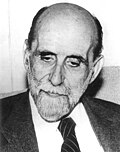
 Spain
Spain
Explanation
Juan Ramón Jiménez is a writer who paints sounds and colors with words. When you read his poems, you may imagine white light and quiet landscapes, and your heart feels calm. In his famous book “Platero and I,” a little donkey and the author spend gentle days together, described in soft language. He cares more about what readers feel than about complicated explanations. Because of this simple but beautiful style, he was awarded the Nobel Prize in Literature.
Related Keywords
pure poetry
Pure poetry is a movement that strips away narrative and social messages, seeking spiritual elevation through the musicality and clarity of imagery. Jiménez refined this ideal in Spanish by repeating simple motifs such as light and whiteness, leaving interpretive space for the reader. As a result, the universal core of feeling emerges and finds resonance across linguistic borders. While influenced by Mallarmé and Valéry, he exploited Spanish rhythms and vowel patterns to create a distinctive voice. The Nobel Committee highlighted this spiritual and artistic rigor as a main reason for granting the prize.
Platero and I
“Platero and I” (1914) is a series of prose poems about a silver-gray donkey and the poet’s daily life. Although the tone is gentle enough for children, it hides profound reflections on nature and the transience of life. Each chapter functions as a standalone prose poem, and the sensory images unfold like a visual sequence. The work marks Jiménez’s transition toward “pure poetry,” balancing simplicity with symbolism. Translated into more than forty languages, it remains popular in classrooms worldwide.
Modernismo
Modernismo was a turn-of-the-century Hispanic literary movement that heightened the musicality of verse through exotic imagery and rich sound patterns. Rubén Darío was its central figure, and Jiménez was initially influenced by it. He later pared down Modernismo’s ornamentation, steering toward interior reflection, yet retained its symbolic handling of images. Modernismo helped internationalize Spanish-language poetry and opened dialogue with French Symbolism and English aesthetics. Within this current, Jiménez differentiated himself by formulating the notion of “pure poetry.”
Spanish Civil War and Exile
The Spanish Civil War (1936–1939) deeply affected the cultural sphere, forcing Jiménez—who sympathized with the Republic—into exile. Seeking refuge from violence and repression, he stayed in the United States, Cuba, and Puerto Rico, teaching at several universities. Exile injected nostalgia and a universal sense of solitude into his poetry, pushing him to pursue even greater linguistic purity. In Puerto Rico he mentored young poets, helping preserve continuity in Spanish-language literature. His belief in the power of art amid political tragedy is thought to have influenced the later Nobel recognition.
Diary of a Newly Married Poet
Published in 1916, this collection is a diary-like sequence of free verse capturing a voyage to the United States and early married life. Centered on motifs of sea and light, it represents shifts in self-awareness through metaphors of “movement” and the “horizon.” Its mix of prose rhythms and lyrical leaps was innovative, bridging Spanish Modernism and pure poetry. An early English translation helped raise Jiménez’s international profile. Academically, the dual spatial consciousness of the Mediterranean and the New World invites post-colonial readings.
Symbolism
Symbolism, a late 19th-century movement centered in France, valued techniques that evoke abstract ideas and emotions through concrete objects. Jiménez absorbed Symbolist influence and fused it with the musicality of Spanish to create a unique poetics. By repeating simple symbols such as whiteness, light, and the sea, he activates the reader’s subconscious. His work emphasizes not the symbol itself but the endless resonance it produces. The ideals of pure poetry and Symbolism thus worked together to heighten artistic purity.
prose poem
A prose poem is a prose form that lacks line breaks yet retains poetic rhythm and condensed imagery. Jiménez made extensive use of this form, balancing narrative freedom with poetic density. “Platero and I” is a prime example, each chapter forming a complete poetic scene within a larger sequence. By adopting prose poetry, readers can experience story and lyricism simultaneously. In the Hispanic world, he significantly elevated the status of the prose poem.
Generational Theory (Generation of 1914)
In Spanish literary history, the Generation of 1914 (Novecentismo) follows the 1898 Generation and is marked by intellectualism and a European outlook. Jiménez, though older, resonates with this group through formal innovation and international vision. His “pure poetry” integrates the generation’s intellectual and sensory traits, raising the level of abstraction in verse. Generational theory serves as a useful frame for analyzing historical context and literary tendencies, and it is often invoked in Jiménez studies. Although the Nobel Prize was awarded to an individual, it also reflects the accomplishments of this broader generational current.