1957 Nobel Prize in Literature
Reason for Award
for his important literary production, which with clear-sighted earnestness illuminates the problems of the human conscience in our times
Laureates
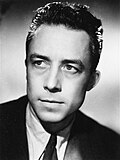
 France
Explanation
Albert Camus was a writer who used stories to show how people think about right and wrong. In “The Stranger,” the main character faces his own feelings and society’s judgment after a sudden crime by the sea. In “The Plague,” a disease spreads through a town and Camus compares hearts that help each other with hearts that want to give up. When you read his books, you naturally ask, “What would I do in that situation?” The Nobel Prize praised Camus because his stories gently shake our conscience. Through his works we learn to value our own feelings and those of our friends.
Related Keywords
Absurd
The “absurd” is Camus’ term for the tension that arises when humans seek rational meaning while the universe remains silent. The gap between questioning and cosmic silence produces both disorientation and an unexpected sense of freedom. Camus contends that we should embrace, rather than deny, this tension in order to affirm life itself. Meursault in “The Stranger” embodies the absurd as he stands between the blazing sun and an impersonal court of law. Understanding the absurd becomes the starting point for living without outsourcing meaning to external authorities.
Existentialism
Existentialism is a 20th-century current that places individual existence before essence, emphasizing freedom and responsibility. While Sartre and Heidegger are its standard-bearers, Camus is frequently grouped with them because his work reflects similar existential anguish. Camus, however, argued that his notion of the absurd is broader than existentialism, addressing the universe’s total silence rather than merely the absence of God. Nevertheless, the revolt in “The Myth of Sisyphus” and the solidarity in “The Plague” resonate with existentialist discussions of freedom and responsibility, inviting comparative studies. Exploring both similarities and differences helps us grasp the moral problems 20th-century thought sought to confront.
The Stranger
“The Stranger” (1942) is the novel that made Camus internationally famous and stands as a landmark of absurdist literature. The plot unfolds around a murder on a sun-scorched Algerian beach and the subsequent trial. The protagonist, Meursault, is condemned even for not crying at his mother’s funeral, exposing how social norms judge emotional comportment. The terse, dry prose and stark contrasts of light and shadow convey the feeling of the absurd directly to the reader. The work continues to be read today as a crossroads between modern literature and philosophy, raising questions about free will, ethics, and belonging.
The Plague
“The Plague” (1947) explores human solidarity and isolation through an epidemic that strikes the fictional city of Oran. The novel is widely read as an allegory of Nazi occupation and can be analyzed on medical, strategic, and ethical levels. Characters—doctors, priests, ordinary citizens—must accept responsibility for choices made while confronting an invisible enemy. Camus weaves epidemic curves and quarantine policies into the narrative, realistically portraying the relationship between public policy and individual action during crises. The book has been rediscovered during recent pandemics and is regarded as a classic that illuminates moral challenges shared by humanity.
Conscience
Conscience refers to the internal psychological and ethical faculty that judges whether our actions are right or wrong. In Camus’ work, moments often arise when personal conscience precedes laws or religion as the ultimate guide for action. Meursault cannot articulate his conscience to the court, which condemns his silence as indifference, forcing readers to examine the gap between inner judgment and social expectation. Dr. Rieux in “The Plague” follows his conscience to save suffering patients rather than obey official directives. In his 1957 Nobel speech, Camus said that an artist’s duty is to speak truthfully, never siding with silence or lies, a stance closely tied to the role of conscience celebrated by the prize.