1959 Nobel Prize in Literature
Reason for Award
for his lyrical poetry, which with classical fire expresses the tragic experience of life in our own times
Laureates
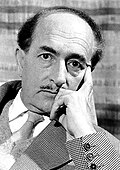
 Italy
Italy
Explanation
Salvatore Quasimodo was an Italian poet. He turned feelings and sadness into gentle songs made of words. When you open his book, you can almost hear the sea or see the sunset. He did not use many hard words, so anyone could understand the rhythm. He wrote while thinking of people who suffered during war and wishing for peace. Readers all over the world felt his emotions. The Nobel Prize in Literature was a gift for his beautiful poems.
Related Keywords
lyric poetry
Lyric poetry is a short poetic form that conveys the poet’s emotions and inner experiences. Its name derives from ancient Greek songs accompanied by the lyre, hence the emphasis on melody and subjectivity. Quasimodo condensed line length and crafted breath-like rhythms to transform personal confession into modern universality. Though speaking in the first person, his poems project collective memories of war and loss. They exemplify how lyric poetry can function simultaneously as private utterance and social testimony.
Hermeticism (Italian Hermetic poetry)
Hermeticism was an early-20th-century Italian poetic movement marked by extreme linguistic compression, dense metaphor, and suggestive omissions. Associated with magazines like “Il Frontespizio” and poets such as Eugenio Montale, it made the reader decipher meaning as if decoding a hermetic cipher. Quasimodo began within this milieu but later incorporated social themes, evolving from pure introspection to public utterance. This trajectory became a key element of his originality.
Sicily
The island of Sicily, Quasimodo’s birthplace, provided a central reservoir of images shaped by its Mediterranean climate and layered history. Poems such as “Fantasia di un ritorno” evoke the island’s intense light, stone towns, and Greek ruins as poetic settings. The labor and poverty of its inhabitants appear as realistic counterpoints. Occasional Sicilian dialect words and place names enrich the sonorous texture of his verse. The contrast with his adoptive city, Milan, underscores feelings of exile and the tensions of modern urban life.
classicism
Classicism, grounded in Greco-Roman aesthetics, values harmony, proportion, and rational order. Through translating Greek tragedies, Quasimodo studied classical meters and reinserted that balance into his terse free verse in an estranging manner. In “Il sonno dell’Arcadia,” Homeric metaphors are juxtaposed with modern urban rubble, suggesting continuity between past and present. The Nobel citation’s phrase ‘classical fire’ refers precisely to this process by which classical energy illuminates modern tragedy. For Quasimodo, classicism was not only formal elegance but also an ethical yardstick.
World War II
World War II (1939–1945) casts a long shadow over Quasimodo’s poetry. He sympathized with the Italian resistance and made devastation and civilian suffering central themes. In “Ed è subito sera,” bombed-out ruins and silent squares appear in symbolic relief. The post-war collection “La terra impareggiabile” intertwines guilt and a hope for renewal. By fusing wartime experiences with personal biography, he elevated them into universal tragedy, echoing the Nobel citation’s reference to the ‘tragic experience of life in our own times.’
translation
Quasimodo was also renowned as a translator of Greek tragedies and sacred hymns, studying the transference of rhythm across languages. The metrical insights gained from translation nourished the cadence and rhetoric of his own verse. His colloquial Italian versions of works like “Oedipus Rex” opened classical texts to contemporary audiences. The constant oscillation between translation and creation underlines the poet’s dual role as interpreter and innovator. The Nobel Prize recognized this comprehensive literary contribution, translation included.