1960 Nobel Prize in Literature
Reason for Award
for the soaring flight and evocative imagery of his poetry which in a visionary fashion reflects the conditions of our time
Laureates
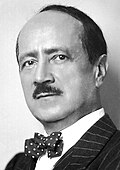
 France
Explanation
Saint-John Perse is a poet who paints beautiful scenes and emotions with words. His poems move like birds soaring freely in the sky, and when you read them you can almost smell the sea or feel the wind. By talking about far-off places and old events, he also helps us think about problems in today’s world. People everywhere admired this power, so he received the Nobel Prize in Literature. His work shows that reading poetry can be a great adventure for the imagination.
Related Keywords
poetic imagery
Perse enwraps the reader with visual imagery rather than abstract notions. Waves, wind, and birds recur, triggering multisensory associations. These images do not advance a plot but merge with verbal musicality to generate rhythm. Readers immerse themselves by experiencing the torrent of images rather than parsing meaning. His multilayered fusion of sight, sound, and touch occupies a singular niche in 20th-century poetry.
epic poetry
Works such as "Anabasis" adopt epic scale yet chart a spiritual journey of modern civilization rather than a hero’s deeds. Borrowing classical epic frames, Perse introduces a meta-historical gaze that spans time and space. The narrator lacks a fixed identity, speaking as a collective voice that guides readers toward universal experience. Rhythmic prose-verse dissolves epic and lyric modes in alternation. Thus he renews epic conventions and broadens post-modernist poetics.
visionary
The Prize citation’s emphasis on "visionary" stems from Perse’s cinematic language that points toward the future. While quoting myths and geography of the past, he evokes an arrival at unknown eras and new worlds. These visions stress expansive possibility rather than pessimism, exploring how humanity may coexist with nature and history. Readers follow a prophetic voice and cross temporal boundaries. Consequently the poems function both as social critique of the present and as proposals for the future.
exile
Stripped of citizenship by the Vichy regime, Perse lived in exile in the United States during World War II, stamping themes of "drift" and "irreversible departure" onto his work. The sense of lost homeland is rendered as spiritual severance rather than mere geography. Travelers in his poems stand for people forced to move by the violence of history. Exile also becomes a chance to reconfigure language and culture, generating poetic polyphony. Thus the experience illuminates universal issues of migration and identity.
diplomat-poet
Perse served in the French Foreign Ministry, becoming chief secretary to the League of Nations president. The multilingual skills and political insight honed in diplomatic cables enrich his poetry with layered vocabulary and geopolitical imagination. The contrast between bureaucratic formality and poetic liberty generates tension within the work. Observing interwar international order from inside lends historical realism that is transfigured into supra-historical allegory. His diplomat status embodies the complex relation between art and discursive power.
modernity
Phenomena of the 20th century—mechanized civilization, imperialism, world wars—are abstracted through Perse’s symbolic language. He does not merely condemn the modern era but perceives its transformative energies, seeking possibilities of renewal. Efforts to fuse nature with technology and past with future give his modernist writing an unusual breadth. Readers feel the complexity of modernity as poetic experience, tasting both critique and affirmation. This approach lies at the heart of the Nobel citation that his poetry "reflects the conditions of our time."