1961 Nobel Prize in Literature
Reason for Award
for the epic force with which he has traced themes and depicted human destinies drawn from the history of his country
Laureates
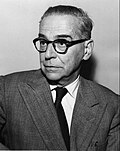
 Yugoslavia
Explanation
Ivo Andrić was a writer from the former country of Yugoslavia. His famous book, “The Bridge on the Drina,” tells the story of a stone bridge that watches people for hundreds of years. The bridge remembers the villagers’ joys and sorrows and talks to the reader. Andrić used the bridge like a main character to teach history in an easy way. War, peace, and friendship—things important to everyone—are shown throughout the tale. Because of this powerful writing, he received the Nobel Prize in Literature. Reading his books makes far-away events feel close to our own lives.
Related Keywords
The Bridge on the Drina
Andrić’s best-known novel, portraying Bosnian history from the 16th to early 20th century through the eyes of a bridge. The real Mehmed Paša Sokolović Bridge provides the setting where Ottoman rule, Austro-Hungarian occupation, and World War I intersect. The bridge acts both as narrator and symbol, connecting people yet also embodying division. It mirrors the complexity of a multi-ethnic, multi-religious society and is reread today in light of post-war ethnic conflicts. The novel is cited in studies of epic fiction, collective memory, and post-colonial criticism.
History of Yugoslavia
Yugoslavia, founded in 1918, passed through a monarchy, World War II, Tito’s socialist federation, and dissolution in the 1990s. Andrić’s novels detail the earlier Ottoman and Austro-Hungarian periods up to the mid-20th century, literarily documenting coexistence and conflict among diverse peoples. His Nobel Prize was linked to Cold-War non-alignment and served as a tool of cultural diplomacy. After Yugoslavia’s breakup, the works are debated from nationalist and reconciliatory viewpoints and revalued as texts of historical consciousness. They now feature prominently in memory studies and transnational-studies curricula.
Ottoman Empire
The Islamic dynasty that ruled the Balkans from the 14th to early 20th century. In Andrić’s fiction, tax systems, religious tolerance and tension, and layered administration are described in detail, evaluating their impact on local society. Construction of the bridge functions as both imperial infrastructure and cultural marker. The narrative avoids a simple ruler-ruled dichotomy, presenting hybrids of law and custom. Connections to contemporary Ottoman studies and post-colonial theory have become a focus of recent scholarship.
Multi-ethnic coexistence
Serbs, Croats, Bosniaks and others have historically lived together in Bosnia. Andrić depicts everyday multicultural interaction in markets, religious rituals, and weddings, while showing how riots and wars expose its fragility. By presenting both hope and difficulty, he invites readers to reflect on the complexity of understanding the Other. After the Yugoslav wars, the theme became central in reconciliation education. It is a concept crossing sociology, anthropology, and literary studies.
Historical novel
A literary genre that constructs stories from past events. Andrić scrutinizes archival sources while inserting fictional characters and narration to fill historical gaps and appeal to readers’ emotions. This expands historical understanding from factual recognition to experiential empathy. Critics compare his work to Tolstoy’s “War and Peace” or Mann’s “Joseph and His Brothers” for its epic scale. Genre studies debate the boundary between memory and fiction and its role in forming national identity.
Narrative technique
Andrić alternates omniscient third-person narration with first-person testimony, creating polyphony through montage. He personifies places such as the bridge or town, letting matter “speak” and presenting objective and subjective time simultaneously. By incorporating multiple languages and dialects, he displays cultural hybridity at the stylistic level. Readers actively reconstruct the whole by piecing together fragmented episodes. These techniques attract comparative studies with modernist literature and film theory.