1962 Nobel Prize in Literature
Reason for Award
for his realistic and imaginative writings, combining as they do sympathetic humour and keen social perception
Laureates
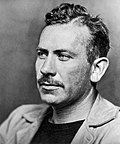
 United States of America
Explanation
John Steinbeck was an American writer who described people’s lives and struggles in simple, easy-to-understand words. In stories like “Of Mice and Men” and “The Red Pony,” he mixes gentle humour with the strength people need to face hard times. When you read his books, you learn why it is important to care for friends and help each other. If you think about your own family and classmates while reading, the stories feel even closer to you. Steinbeck used warm humour and sharp observation to give readers around the world a sense of hope.
Related Keywords
social consciousness
A viewpoint that looks at society from the position of the underprivileged, underlying all Steinbeck’s works. By exposing poverty and discrimination, it invites readers to empathize and feel the need for action. The Grapes of Wrath, which indicts economic inequality during the Great Depression, exemplifies this. It is still cited when discussing today’s wealth gaps.
literary realism
A literary method that depicts society and people without idealization. Steinbeck pursues realism by using colloquial language, specific place names, and detailed portrayals of occupations and living conditions. He simultaneously layers symbolic scenes, juxtaposing realism with allegory.
Great Depression
A severe economic crisis that began with the 1929 stock crash and dominated the 1930s United States. Job loss and farm foreclosures proliferated, prompting mass migration to the West Coast. Steinbeck used this context to depict structural economic distortions and human solidarity. Understanding his work benefits from knowledge of contemporary social policies such as the New Deal.
empathy
The ability to feel another person’s emotions or situation as one’s own. Steinbeck elicits empathy by portraying characters’ inner lives in detail, prompting readers to treat social issues as personal concerns. His works are frequently used in education because they effectively foster empathy.
migrant workers
Workers who move between regions to find seasonal agricultural employment. In 1930s America, many migrated from Oklahoma and other states to California. Steinbeck portrayed their harsh working conditions and family solidarity, shaping public opinion that influenced labour reforms.
The Grapes of Wrath
A 1939 novel that denounces social injustice through the hardships and resistance of the Joad family. It won the Pulitzer Prize and was adapted into a film, sparking widespread debate. It was a central work cited by the Nobel Committee in honouring Steinbeck. The novel remains a landmark of 20th-century American literature.