1968 Nobel Prize in Literature
Reason for Award
for his narrative mastery, which with great sensibility expresses the essence of the Japanese mind
Laureates
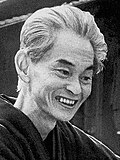
 Japan
Japan
Explanation
Yasunari Kawabata wrote stories that show the beauty of Japan’s nature and people’s feelings in gentle words. His famous book “Snow Country” describes a town covered in white snow and the hearts of the people who meet there. When you read it, you can feel both the cold of winter and the warmth of human kindness. Some of his stories are long, some are very short, but all of them paint clear pictures like picture books. People around the world read his work and think, “Japan is so beautiful.” He received the Nobel Prize as a reward for his great effort in literature.
Related Keywords
Snow Country
A novel serialized between 1935 and 1947. Set in the snow-bound hot-spring town of Echigo-Yuzawa, it portrays the intersecting love of urban intellectual Shimamura and geisha Komako. Alternating natural and psychological descriptions, optical images—mirrors, windows, snow reflections—project the protagonist’s inner state. Cited prominently by the Nobel Committee, it has been translated into more than thirty languages worldwide.
Palm-of-the-Hand Stories
A collective title for ultra-short stories Kawabata wrote throughout his career. Ranging from a few hundred to a few thousand characters, they capture dreams or mundane instants. Considered a precursor to modern flash fiction, they serve as an experimental field for evoking emotion with minimal language. Significant for expanding the Japanese idea of ‘blank space’ into an international literary form.
sense of impermanence
A Buddhist-derived Japanese value that everything changes and nothing is permanent. In Kawabata’s works it appears as seasonal shifts and the transience of relationships, quietly steering characters’ behavior. Readers are invited to sense the beauty of change itself and to embrace ephemerality.
wabi-sabi
An aesthetic valuing simplicity, quietness, and the patina of time. Prominent in tea-ceremony and old-capital descriptions in “Thousand Cranes” and “The Old Capital.” Kawabata’s prose avoids excessive explanation, letting readers ‘feel’ wabi-sabi through sensory immersion.
Shinkankakuha (New Sensation School)
A Japanese modernist literary movement of the late 1920s emphasizing immediacy of sensation and cinematic style. Kawabata debuted as a central member, and his later works continue its image-oriented prose legacy.
ma (interval)
A concept signifying blankness, pause, or resonance valued in Japanese arts. Kawabata uses silence between lines and blank space during scene shifts to stimulate readers’ imagination and activate narrative experience. Notoriously difficult to reproduce in translation.
“Japan, the Beautiful and Myself” (Nobel Lecture)
Lecture delivered in December 1968. Quoting classics like “Hōjōki” and “Tsurezuregusa,” Kawabata discussed Japanese beauty and views of life and death. It serves as a key text when examining cultural self-representation and self-translation.