1971 Nobel Prize in Literature
Reason for Award
for a poetry that with the action of an elemental force brings alive a continent's destiny and dreams
Laureates
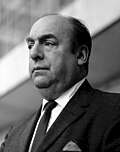
 Chile
Chile
Explanation
Pablo Neruda was a poet from Chile. His words paint bright pictures of mountains, oceans, and the feelings of everyday workers. When you read him, you can almost hear the heartbeat of South America. It feels as if the Earth itself is singing. That is why people all over the world love his poems.
Related Keywords
poetry
A literary form that uses rhythm and imagery to convey emotions and ideas. Neruda transfigured everyday materials into poetic language, opening new sensory pathways for readers. His strong cadence and abundant metaphors keep their special resonance even in translation. The Nobel Committee valued how this poetic technique re-awakened a continent’s memory. His work demonstrates that poetry, far from decorative, can speak for society and history.
20th-century Latin American literature
An umbrella term for diverse movements that include Borges, García Márquez, Cortázar, and others. Colonial legacies, revolution, and identity quests are central themes. Neruda anticipated this wave by fusing social realism with poetic experiment. His work influenced the later ‘Boom’ generation and prepared the ground for magic-realist techniques. He is pivotal in bridging regional writing to world literature.
social realism
An artistic trend focusing on social issues and the perspective of the working class. Neruda described miners and peasants, exposing structures of oppression. In his Spanish Civil War poems he sang of resistance to fascism and called for international solidarity. By fusing realism with poetic symbolism, he maintained both expressive power and artistic quality. This approach deeply influenced later political poetry.
Spanish Civil War
A conflict between Republican and Francoist forces from 1936 to 1939 in Spain. Many intellectuals joined the International Brigades, making it a symbol of global anti-fascism. Neruda, then a diplomat in Madrid, witnessed the war and wrote “España en el corazón.” The experience intensified his political consciousness and altered the tone of his later poetry. It is regarded as a turning point that showed the inseparability of literature and politics.
Canto General
An epic poem published in 1950 that spans more than thirty sections portraying the nature, history, and peoples of the American continent. Traversing Incan mythology to contemporary politics, it aims to build a ‘collective memory’ of the hemisphere through verse. The work merges Whitman-style free verse with epic structure, supported by musical refrains. Widely translated, it is hailed as a landmark of anti-colonial literature. It is the work most directly linked to his Nobel citation.
exile and diplomacy
Neruda served as a diplomat in Mexico, Argentina, Spain, France, and other countries, and lived in exile during political repression at home. Contact with diverse cultures widened his international perspective and enriched his imagery with local landscapes. His diplomatic skill informed his public speeches and letters to allied leaders such as Mandela. Exile added both fluidity and resistance to his identity, fueling his creativity. These experiences enhanced the universality and historicity of his poetry simultaneously.