1973 Nobel Prize in Literature
Reason for Award
for an epic and psychological narrative art which has introduced a new continent into literature
Laureates
 Australia
Explanation
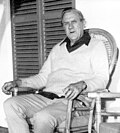
Patrick White was a writer who painted lively pictures of Australia’s wide land and people’s hearts through his stories. Reading his books is like going on a trip to a far-away country you have never seen. His characters feel brave and confused as they look for their own place in the world. Although his stories are long, they describe nature, animals and family feelings so clearly that they feel like a movie in your mind. Thanks to White’s books, people all over the world learned more about Australia and its people. That is why people say he ‘drew a new continent on literature’s map.’ The Nobel Prize in Literature was given to him for creating such wonderful tales. By reading stories, you too can discover new ideas and ways of thinking.
Related Keywords
epic
An epic is a long narrative poem or novel portraying the fate of a nation, people, or individual on a grand scale. White adapts classical epic structure to the novel, re-reading exploration journals and settlement history through mythic frames. Hence prayers and ritual scenes recur, lending the prose an almost liturgical resonance. The epic architecture intersects individual psychology with historical time, aligning with late-modernist experimentation. Moments where characters confront destiny recall Greek tragic catharsis, yet the presence of White Australia policy and colonial trauma gives the form a distinctive edge.
psychological realism
Psychological realism is a technique that portrays characters’ inner drives from multiple angles. White employs stream of consciousness and interior monologue to verbalize invisible feelings—faith’s uncertainty, sexual conflict, isolation. Frequent shifts in viewpoint allow readers to experience one event through several mental lenses. This exposes the gap between outward action and inward turmoil, intensifying themes of redemption and self-recognition. When combined with Australia’s harsh landscapes, psychological realism turns nature into an externalized mindscape.
Australian literature
Australian literature comprises English-language works set in or originating from Australia, ranging from 19th-century bush ballads to 20th-century urban novels and contemporary multicultural or Indigenous writing. Patrick White became the first Australian writer to gain global acclaim after WWII, lifting national literature onto the international stage. Unique ecology, colonial history, and relations with Indigenous peoples sit at the heart of thematic concerns. Presently, climate change discourse and post-colonial theory drive renewed critical attention to the field.
colonial experience
From 1788 onward, Australia developed from a British penal colony, through the White Australia policy, toward its own nationhood. This process involved dispossession of Indigenous lands, cultural suppression, and a complex migrant identity. White represents the colonial emptiness and sense of exile through isolated explorers and settlers. Portraying colonial experience exposes past injustices and prompts debates on reconciliation and multicultural coexistence. Literature functions as a medium for emotions and memories absent from history textbooks.
symbolism
Symbolism employs recurring images to convey deeper meanings without explicit explanation. In White’s novels, sheep flocks, deserts, storms, and illness symbolize mental states or religious conflict. Readers must overlay physical phenomena with psychological or metaphysical layers. While rooted in 19th-century French poetry, symbolism is fused with Australian scenery in White’s hands. Consequently, natural events escalate to mythic or ritual dimensions, granting the work polysemous depth.