1977 Nobel Prize in Literature
Reason for Award
for a creative poetic writing which illuminates man's condition in the cosmos and in present-day society, at the same time representing the great renewal of the traditions of Spanish poetry between the wars
Laureates
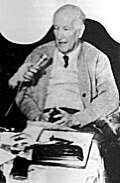
 Spain
Spain
Explanation
Vicente Aleixandre was a Spanish poet who linked stars, space, and our everyday lives with gentle words. When you read his poems, you can feel both the excitement of looking at the night sky and the warm feelings you have for friends and family. Even in times of conflict, his poems remind us not to lose hope, making our hearts feel cozy. Instead of hard words, he uses rhythm and images that are fun to read. That is why people all over the world grew to love his poetry.
Related Keywords
Spanish poetry
The tradition of poetry in the Spanish language stretches from medieval troubadours to the present. It includes the lyrical Golden Age, fin-de-siècle Symbolism, and the experimental works of the Generation of ’27. Aleixandre reused traditional motifs while renewing language through free verse and cosmic imagery. In doing so, he helped break the post-war stagnation and influenced Latin American poetry.
Generation of '27
A group of avant-garde Spanish writers and poets active around 1927, including García Lorca and Cernuda. They combined respect for classical verse with European avant-garde techniques. Aleixandre was one of its theoretical pillars, presenting a cosmic poetic vision. Although the Spanish Civil War and exile scattered the group, their impact on world literature endures.
Surrealism
An early 20th-century art movement prioritizing the liberation of the unconscious and automatic writing. In Spain, Dalí and Buñuel are well-known, but in poetry Aleixandre deepened Surrealist techniques with symbolic imagery of dreams, cosmos, and love. By dismantling linguistic logic, he pursued “inner freedom” beyond war and repression, earning critical acclaim.
Free verse
A poetic form without fixed meter or rhyme. Popularized by French Symbolists in the late 19th century, it spread worldwide in the 20th. Aleixandre used free verse to express emotional fluidity and cosmic temporality simultaneously, introducing new rhythms to Spanish-language poetry. The liberation of form symbolized the liberation of thought, giving the technique social significance.
Cosmic imagery
A collective term for metaphors and symbols evoking galaxies, stars, and darkness. Aleixandre expanded personal emotion to cosmic scale, portraying alienation and solidarity on multiple levels. Scholars note an influence from contemporary cosmology, such as relativity and the expanding universe. Readers are thus invited to reconsider human existence from a perspective beyond the self.
Spanish Civil War
The 1936–39 conflict in Spain that caused deep divisions and exile among intellectuals, with increased censorship. Aleixandre’s poetry embodies the pain of war alongside love and hope that transcend it. His work is often studied as a prime example of how political violence spurs formal innovation in poetry.
Metaphor
A rhetorical device that expresses one thing through another. Aleixandre employed bold metaphors like “night = inner depths” and “sea = unconscious,” expanding the reader’s perception. Chains of metaphors underpin both the musicality and polysemy of his poetry.
Human condition
A concept covering unavoidable aspects of life—loneliness, death, love, social bonds—studied in philosophy and literature. Aleixandre poetically examined it from a cosmic viewpoint, depicting interactions between individual and whole. His poems present the human condition not as a limitation but as an ‘open question.’
Love and solitude
Aleixandre’s poems repeatedly stage deep love alongside the solitude that often accompanies it. Rather than opposites, the two function as complementary forces, letting readers experience emotional amplitude. In post-war texts, love becomes a catalyst for regeneration amid social estrangement.
Poetic innovation
The act of renewing existing poetic forms and vocabulary to open new expressive possibilities. Through free verse and semiotic experimentation, Aleixandre expanded the horizons of Spanish-language poetry and influenced successive generations. It lies at the core of the Nobel citation.