1985 Nobel Prize in Literature
Reason for Award
for novels that combine the poet's and the painter's creativeness with a deepened awareness of time in the depiction of the human condition
Laureates
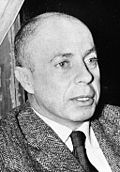
 France
Explanation
Claude Simon wrote stories as if he were painting pictures with words. He lets scenes and people flow together like a slow river of time. When we turn the pages, it feels a bit like looking into a picture book. The rhythm of his sentences is musical, almost like a poem, and it shows both the sad and happy sides of human life. That is why readers all over the world were fascinated by his books.
Related Keywords
Nouveau Roman
An avant-garde French literary movement that emerged in the late 1950s, prioritising the depiction of objects and consciousness over plot. It features anti-heroic characters, non-linear structures and meticulous material description. Claude Simon is regarded, alongside Robbe-Grillet and Sarraute, as one of its central figures. The movement resonated with Nouvelle Vague cinema and experimental contemporary art, fostering diversification in world literature. Its dismantling and reconstruction of narrative form strongly influenced post-modern storytelling.
Sense of Time
In Simon’s novels, past, present and future intersect constantly, making readers experience time as a circle or spiral rather than a straight line. His portrayal of inner time relates to Bergsonian durée. Fragmentary memories and rapid scene changes visualise the subjectivity of recollection and invite a reinterpretation of history at the level of personal experience. Through the narrator’s stream of consciousness, time shifts from being merely a narrative engine to becoming the very topic of ontological inquiry. This approach helped modern fiction rethink the concept of time.
Collage Technique
Adapting the visual art practice of collage, this structural method pastes together different styles, viewpoints and temporal fragments. Simon juxtaposes war scenes, family history and landscape description, urging readers to actively weave meaning. Fragmentation of the text formally mirrors historical discontinuity and shattered memory. The narrative appears not as a finished object but as a process in perpetual formation. Such technique aligns well with hypertextual reading in the digital age.
Visual Imagery
Simon’s prose meticulously captures subtle shifts of colour and light, appealing directly to the reader’s visual cortex. Descriptions reminiscent of still-life composition or cinematic pan shots smoothly connect scene transitions. By endowing words with painterly functions, the text becomes a visualised object in its own right. This visuality operates as a device through which emotions and ideas are experienced sensorially. It also offers valuable clues for studying the interface between literature and contemporary visual media.
War and Memory
The author’s own military service casts a shadow over his oeuvre, with gunfire, fear and silence etched into minute details. Flashbacks to the battlefield, almost anticipating post-traumatic stress disorder, accentuate human fragility. By intersecting personal memory with public history, readers become aware of the selectivity inherent in ‘told history.’ This theme provided key insights for European debates on post-war reconciliation. Rather than reproducing violence, Simon depicts the very mechanism of memory, thereby stimulating ethical imagination.
Self-reflexivity
Within the narrative the narrator comments on the very process of telling, exposing the moment when sentences come into being. Consequently, readers realise that fiction does not merely copy reality but generates its own reality. Such self-reflexivity dynamically visualises the relationship among author, narrator and reader, challenging the locus of interpretation. Through this device Simon dismantled authoritative narration and anticipated the concept of the open text. It resonated with post-structuralist theory and strongly contributed to the development of metafiction.