1986 Nobel Prize in Literature
Reason for Award
who, in a wide cultural perspective and with poetic overtones, fashions the drama of existence
Laureates
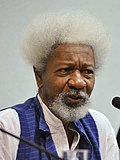
 Nigeria
Explanation
Wole Soyinka is a writer born in Nigeria. He writes stories and plays that show the happiness and sadness people feel in life. Soyinka mixes the traditions of his Yoruba heritage with ideas from many other cultures in his tales. Because of this, readers can feel close to events that happen far away. The Nobel Prize in Literature is given to people who write wonderful books and stories. In 1986, Soyinka became the first African to receive this prize. The judges praised his “wide cultural perspective” and “poetic overtones.” His award inspired many children to become interested in African stories and history.
Related Keywords
African literature
African literature encompasses the storytelling traditions of writers from the African continent and its diaspora. It ranges from oral myths and poetry to reflections on colonial experiences and modern urban life. Works appear in many languages, including English, French, Portuguese, Swahili and Yoruba. Recurring themes include colonialism, independence struggles and the search for cultural identity. Soyinka, as a central figure, demonstrated that African literature stands as a vital branch of world letters.
Drama
Drama is a literary form written to be performed on stage. Dialogue and stage directions transmit story and emotion to the audience. Soyinka uses drama to fuse traditional masquerade theater with elements of Western stagecraft. Works like “The Lion and the Jewel” and “Death and the King’s Horseman” transform Yoruba mythology into contemporary political commentary. His plays rely heavily on visual and musical effects, giving spectators a multilayered aesthetic experience.
Colonialism
Colonialism is a political-economic system in which one nation controls and exploits another people or territory. Nigeria was under British colonial rule from the late 19th century until the mid-20th century. Colonialism profoundly shaped language, education, administration and value systems, leaving complex legacies after independence. Soyinka’s works sharply portray the psychological scars colonial domination inflicts on both individuals and communities. His critique argues for the need of postcolonial societies to build an autonomous future.
Yoruba culture
Yoruba culture comprises the religion, arts and social institutions of the Yoruba people of West Africa. It possesses a rich mythology in which deities called Orisha interact with the human world. Music, dance and mask theater play central roles in communal rituals and festivals. Soyinka was exposed to this culture from childhood and made it the nucleus of his creative work. Through a Yoruba worldview he depicts universal human conflicts, offering readers fresh perspectives.
Postcolonial criticism
Postcolonial criticism is an academic field that analyzes societies and cultures after colonial rule. It interrogates power structures, subjectivity and representation, asking how literature and art enact resistance or reinterpretation. Soyinka’s plays and essays are major texts within postcolonial theory. He relativizes Eurocentric viewpoints and presents spaces where multiple histories and memories intersect. His discussions offer tools for understanding cultural hybridity and the processes of decolonization.
Civil rights movement
The civil rights movement refers to collective actions that demand political and social equality. African independence struggles and the 1960s Nigerian civil war form intricate layers of this history. Soyinka was imprisoned under a military regime for advocating freedom of expression. This experience crystallized in works such as “The Man Died: Prison Notes,” becoming a symbol of resistance. His activism demonstrates that literature can serve as a spark for social change.
Symbolism
Symbolism is a literary and artistic method that conveys emotions and ideas through symbols and suggestion rather than direct description. Soyinka deploys masks, colors and weather as symbols to illuminate subconscious layers. This invites multiple interpretations and heightens the lingering resonance of his texts. Symbols also served as vehicles for political messages that could slip past censorship. His intricate symbolic system bridges African oral poetry and Western aesthetics.
Allegory
Allegory is a narrative device in which the surface story implies another deeper meaning or moral lesson. In Soyinka’s plays, conflicts among kings or gods point to real-world power struggles. For instance, “A Play of Giants” presents military dictatorship and ethical responsibility through a dual structure. Allegorical techniques give audiences space to critically examine political circumstances. At the same time, they expose universal human dilemmas, enabling the works to resonate across eras.
Political oppression
Political oppression refers to situations in which governments or power holders suppress dissent and restrict freedoms. In Nigeria, censorship and surveillance intensified after military coups. Soyinka kept writing under such circumstances, using art as a form of resistance. His works demonstrate how oppression damages personal dignity and communal creativity. The warning renews awareness of the importance of freedom of expression in today’s world.
Exile literature
Exile literature refers to works written by authors who have left their homeland for political or social reasons. Themes include the pain of separation and the reinterpretation of home from afar. Soyinka experienced repeated expulsions and exiles, during which he wrote essays and plays. The distance afforded him a unique critical perspective on Nigerian society. Exile literature offers possibilities for transnational solidarity and multicultural identity.