1988 Nobel Prize in Literature
Reason for Award
who, through works rich in nuance – now clear-sightedly realistic, now evocatively ambiguous – has formed an Arabian narrative art that applies to all mankind
Laureates
 Egypt
Egypt
Explanation
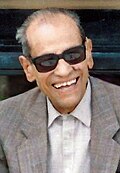
Naguib Mahfouz is a writer from Egypt. He wrote lively stories in Arabic about families, friends and everyday life. Even if readers speak another language, his tales make them feel the same emotions. Opening his books feels like walking through the narrow streets of Cairo together. Because his stories bring joy and thought to people everywhere, he received the Nobel Prize in Literature.
Related Keywords
Arabic literature
The corpus of poetry and prose written in Arabic, spanning from 7th-century epic verse to contemporary novels. During the Islamic Golden Age it intertwined with science and philosophy, producing diverse genres. Following the 19th-century Nahda (renaissance), Western literary influences merged with native traditions, creating new narrative forms. Mahfouz stands as a representative of this modern novelistic current, blending realism and symbolism. His Nobel win anchored Arabic literature firmly on the world literary map.
Cairo Trilogy
Comprising Palace Walk, Palace of Desire and Sugar Street, the trilogy portrays Egyptian history from 1917 to 1949 through the lens of a single family. The rigid father al-Sayyed Ahmad and his five children embody societal shifts from monarchy to revolution. Detailed depictions of streets, cafés and other urban spaces turn everyday citizens into narrators of history. Its expansive structure and polyphonic voices broadened the epic potential of the Arabic novel. Widely translated, it remains central to Mahfouz’s critical acclaim.
Egyptian society
A social structure marked by multi-ethnic and multi-religious coexistence, shaped by colonial rule, independence movements and rapid urbanization. Mahfouz introduces citizens from varied strata—commoners, intellectuals, the poor—to reveal this complexity through their interactions. Conflicts between patriarchy and female emancipation, traditional faith and secularization form narrative pivots. Such depictions gesture toward universal challenges faced by developing societies undergoing modernization. Readers empathize with individuals while surveying societal dynamics.
Realism
A literary technique portraying social reality as it is, detailing characters’ psychology and environments. Established in 19th-century Europe and introduced to the Arab world during the Nahda. Mahfouz actively incorporates sensory elements—market smells, sounds, seasonal changes—treating Cairo itself as a character. Realism lends credibility while inviting readers to adopt a critical observer’s stance. He overlays symbolic and mythical structures onto this base, enabling multilayered interpretation.
Allegory
A device that conveys abstract ideas or social critique through concrete stories. Widely employed to communicate thought under strict censorship. In Children of Gebelawi, prophets from the Bible and Qur’an become models to allegorize the conflict between authority and freedom. Readers enjoy the surface narrative while deciphering political and religious subtexts. Mahfouz’s deft allegory demonstrates literature’s capacity for resistance and dialogue.
Modernization
The transformation of traditional society through technological innovation, urbanization and educational reform. In Egypt it accelerated during state-building after British rule, producing value conflicts. Mahfouz depicts its lights and shadows via generational clashes and identity crises. Modernization brings convenience yet can fragment communities and intensify loneliness. His narratives prompt readers to contemplate this duality.
Religion and humanity
How to reconcile an Islamic worldview with personal free will and ethics is a core theme in Arab literature. Mahfouz’s characters grapple with faith, questioning God and the meaning of salvation. The discourse transcends doctrine, expanding into the universal issue of how humans should live. His religious portrayal holds both reverence and critique, urging readers to adopt a multifaceted understanding. Thus literature becomes a forum for dialogue between religion and secular life.
Nobel Prize in Literature
An international award established by Alfred Nobel’s will, presented annually to authors with outstanding literary contributions. Since 1901 it has honored writers representing diverse languages and cultures. Mahfouz’s 1988 win, the first for the Arabic-speaking world, carries historic significance. The citation praised his formation of an Arabic narrative art with universal relevance. The event symbolized literature’s power to transcend cultural boundaries.