1989 Nobel Prize in Literature
Reason for Award
for a rich and intensive prose, which with restrained compassion forms a challenging vision of man's vulnerability
Laureates
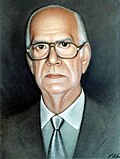
 Spain
Spain
Explanation
Camilo José Cela was a Spanish writer. His books use gentle yet powerful words to show how people feel when they are sad or facing hard times. Reading them helps us think about friends’ feelings and care for others. Because the stories happen in Spanish towns and villages, we can imagine life in another country. Cela’s tales are like treasure boxes that can cheer us up and make us think.
Related Keywords
Tremendismo
A post-war Spanish literary technique that exposes the absurdity of human existence through stark violence and extreme situations. Cela’s “The Family of Pascual Duarte” is its emblematic work. The style simultaneously unsettles and morally engages readers, serving as a device of social critique. It features vivid imagery and colloquial rhythms, influencing film and theatre adaptations.
The Family of Pascual Duarte
A 1942 novel structured as a first-person prisoner’s confession. It presents a fatalistic worldview through rural poverty and violence, sparking controversy under post-Civil-War censorship. In literary history it marks the advent of existential themes and the tremendismo technique.
The Hive
A 1951 ensemble novel set around a Madrid café, depicting nearly three hundred characters in short fragments. The fragmented structure evaded censorship while revealing the suffocation and solidarity of ordinary people under Franco. Its polyphonic narration and reproduction of everyday speech are acclaimed as a turning point in modern Spanish literature.
Post-Civil-War Spanish literature
After the Civil War ended in 1939, writers operated under strict political control, using metaphor and symbol to portray reality. Authors like Cela and Delibes combined social realism with formal experimentation, broadening Spanish-language literary horizons. Works from this period, along with their censorship files and revisions, offer valuable primary material for research.
Censorship
Under Franco, Spanish publications underwent prior censorship, with politically or religiously “dangerous” expressions deleted or altered. Cela used fragmented structures and layered metaphors to bypass the system while conveying truth. Censorship traces in drafts and publisher letters now serve as crucial material for textual criticism.
Royal Spanish Academy
The official institution responsible for standardizing Spanish and compiling its dictionary since 1713. Cela became a member in the 1990s, promoting vocabulary modernization and dialect research. His participation is noteworthy as a case of a creative writer directly shaping language policy.