1990 Nobel Prize in Literature
Reason for Award
for impassioned writing with wide horizons, characterized by sensuous intelligence and humanistic integrity
Laureates
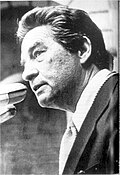
 Mexico
Explanation
Octavio Paz was a Mexican poet who used words to show the beauty of the world and people’s hearts. When you read his poems, you can almost see the sea, the desert, and busy cities in front of you. Instead of hard explanations, he shares feelings through rhythm and vivid pictures. He teaches that even if countries and cultures differ, everyone can look up at the same sky. His rich imagination and gentle language earned him the Nobel Prize in Literature.
Related Keywords
Mexican literature
Mexican literature spans themes from indigenous myth to contemporary urban life, characterized by the interplay of Spanish and native languages. Octavio Paz inherited and re-shaped this tradition through an international lens. His poetry and criticism serve as key documents of post-revolutionary identity search. They convey the multilayered nature of Mexican culture to readers worldwide. Consequently, his work remains central in recent postcolonial scholarship.
modern poetry
Since the late 19th century, modern poetry has broken fixed meters and explored free verse and visual experimentation. Paz manipulated sound, blank space, and layout, treating poetry as spatial art. His visual poem "Blanco" exemplifies this approach. Such experimentation expanded readers’ sensory engagement and updated the concept of poetry itself. Through extensive translation, he connected with international poetic movements.
Surrealism
Surrealism, an avant-garde movement originating in France, values the unconscious and dream logic over conventional reason. Paz encountered André Breton and others during his 1940s stay in Paris, absorbing their influence. Jumps in metaphor and fragmented temporality mark his poetic techniques. Yet he rejected political dogma, transforming Surrealism into a vehicle for humanistic dialogue, which gives his work a distinctive stance. He is therefore a key case for studying the Latin American transformation of Surrealist ideas.
essay
Besides being a poet, Paz was an excellent essayist, discussing culture, history, and language in works like "The Labyrinth of Solitude" and "The Bow and the Lyre." His essays blend a prose-poetic rhythm with philosophical depth. Readers are encouraged to think while moving between poetry and theory. The flexible essay form suited his multicultural perspective. He is credited with refreshing the tone of Latin American critical writing.
humanism
Humanism values human dignity and reason, aiming to improve society through dialogue and empathy. Through poetry and diplomacy, Paz defended individual freedom and creativity over political ideology. His journal "Vuelta" published diverse opinions, practicing an open space for debate. His works sharply criticize violence and dictatorship that deny dialogue. This ethical stance is cited in the Nobel award as his "humanistic integrity."
cultural cross-pollination
Paz’s life spanned Mexico, France, India, Japan, and more. He studied local traditions and fused them in his work; for instance, he juxtaposed Zen concepts of emptiness with Latin American festivity to create new mental spaces. This approach is seen as a forerunner of cross-cultural comparative studies. It provides a model for mutual understanding in the age of globalization.