1991 Nobel Prize in Literature
Reason for Award
who through her magnificent epic writing has – in the words of Alfred Nobel – been of very great benefit to humanity
Laureates
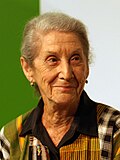
 South Africa
Explanation
Nadine Gordimer was a writer born in South Africa. She wrote stories that helped people think about equality and freedom. At that time South Africa had a rule called “apartheid” that treated people differently by skin color. Gordimer’s books explained how unfair that system was in words both children and adults could understand, giving many people courage. Her stories make readers feel that all people are the same and teach kindness. Because her writing spread these good ideas around the world, she received the Nobel Prize in Literature.
Related Keywords
apartheid
Apartheid was a system of racial segregation enforced in South Africa from 1948 to 1994. The white regime legally separated living areas and schools by skin color and stripped black citizens of voting rights. Resistance movements triggered international sanctions and cultural boycotts, leading to the system’s collapse. Many of Gordimer’s works narrate how apartheid tore families and friendships apart. The empathy her literature generated helped build global opposition to the policy.
South African literature
South African literature is a multilingual tradition in English, Afrikaans, Zulu and other tongues, long focused on colonialism, mine labor and the anti-apartheid struggle. Gordimer, though white, helped bring black writers’ voices to international audiences. After democratization, immigrant and queer literatures added further layers. This dynamic environment nourished the polyphonic qualities of her work.
epic prose
Epic prose fuses the grandeur of epic poetry with the detailed narration of the novel, covering vast spans of time and space while delving into inner life. Gordimer juxtaposes social upheaval with personal conflict to portray modern South African history. Readers experience a tapestry where historical forces and everyday choices intertwine. The Nobel Committee praised her for this magnificent epic writing.
humanism
Humanism places human dignity and freedom at the center. In the late 20th century it aimed to restore humanity damaged by colonialism and dictatorships. Gordimer’s fiction explores the potential for ethical action amid political violence. Her characters waver yet retain imaginative empathy for others. This stance generates universal resonance and broadens human-rights awareness.
political censorship
Political censorship refers to the restriction of expression by authorities. The apartheid regime imposed strict pre-publication controls on literature and journalism. Several of Gordimer’s works were banned, fueling debates on publishing freedom. Censorship pushed writers to refine metaphorical strategies, while foreign publishers conveyed the reality of oppression abroad. Studies of censorship are vital for understanding free speech and cultural resistance.
moral dilemma
A moral dilemma occurs when conflicting values make a fully ethical choice impossible. Gordimer’s characters must decide, for example, whether to protect family or pursue justice. Readers realize that inaction is also a choice and reassess their own ethics. Research on dilemmas in literature intersects with philosophy and psychology, developing into an interdisciplinary field that probes the conditions of empathy.
short story
The short story is a form that completes a narrative in relatively few pages, characterized by tight structure and impactful endings. Gordimer published more than 200 short stories exposing the absurdities of everyday South African life. Magazine publication spread them quickly at home and abroad while lowering the risk of bans. She developed a style with startling plot twists that leave interpretive space for readers. Short-story studies are significant to narratology and media history.