1993 Nobel Prize in Literature
Reason for Award
who in novels characterized by visionary force and poetic import, gives life to an essential aspect of American reality
Laureates
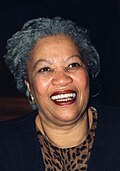
 United States of America
Explanation
Toni Morrison is a storyteller. Her stories gently tell about the history and feelings of Black people living in America. When you read them, it feels as if someone is speaking right in front of you. Although sad events appear, the characters discover courage and love. These powerful tales moved people all over the world and earned her the Nobel Prize in Literature.
Related Keywords
African American literature
African American literature is a genre that charts the history and culture of people brought from Africa and their descendants in the United States. Writers such as Harriet Jacobs and Langston Hughes laid its foundations from the 19th to the 20th century. Frequent themes include the memory of slavery, the struggle against racism, and the bonds of family and community. Storytelling techniques borrow from oral tradition and musical rhythms, creating polyphonic texts. Toni Morrison stands as a central figure who both inherited and reinvented this lineage for an international audience.
Beloved
Beloved, published in 1987, is Morrison’s signature novel inspired by a real incident. Set soon after the Civil War, it tells of Sethe, a formerly enslaved woman whose house becomes haunted by a ghost-like girl. The narrative intersects the extremities of maternal love with the cruelty of slavery, making historical trauma visible. Its poetic, fragmented storytelling demands active reconstruction by the reader, swirling past and present together. The novel won the Pulitzer Prize and was a major factor in Morrison’s Nobel recognition.
historical memory
Historical memory refers to how individuals and communities remember and transmit past events. In Morrison’s novels the memories of slavery and racial oppression intrude upon the present as ghosts and dreams. This technique shows that the past is not finished but shapes the formation of contemporary identities. Reading her work brings to light personal experiences omitted by official historiography. Thus, historical memory is a key concept not only in literary studies but also in sociology and psychology.
slavery
Slavery was the system that forcibly transported Africans to the Americas from the 16th to the 19th century for labor. It involved severe human rights violations such as trafficking, family separation, and violence. Morrison portrays the aftermath of slavery as trauma embedded in individuals and social structures. Her depiction gives the narrative historical depth and poses moral questions to the reader. Studying slavery through literature provides clues for understanding today’s racial issues.
magical realism
Magical realism is a literary technique in which magical events blend seamlessly into a realistic world. Popularized by Latin American writers, it was adapted by Morrison to craft her distinctive voice. Examples include the ghost in “Beloved” and the narrative voices in “The Bluest Eye.” By treating reality and fantasy on equal terms, the method symbolically exposes the unseen layers of historical violence. It offers readers a critical lens for reinterpreting reality.
oral tradition
Oral tradition is the cultural practice of transmitting stories and history by word of mouth. In African American communities, preaching, blues, and gospel served as key narrative forms. Morrison’s prose incorporates their rhythms and repetitions, creating a musical sound that addresses the reader. By recreating the texture of voice on the page, she makes visible the presence of people forced into silence. This technique turns the act of reading into a communal ritual that fosters solidarity beyond the individual reader.
identity
Identity is the concept through which people feel who they are and locate themselves in society. It is formed by overlapping factors such as race, gender, class, and culture. In Morrison’s works, characters seek identity through their names, bodies, and memories. Oppression and discrimination hinder this formation, yet the stories show that community and imagination can restore it. The theme deepens readers’ self-understanding and prompts reflection on diversity.