1996 Nobel Prize in Literature
Reason for Award
for poetry that with ironic precision allows the historical and biological context to come to light in fragments of human reality
Laureates
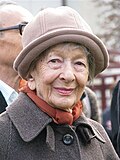
 Poland
Explanation
Wisława Szymborska is a poet from Poland. Her poems look closely at everyday things, as if using a magnifying glass. They contain a gentle, sometimes funny twist called irony, yet make us think deeply about what it means to be human. People around the world loved this mixture of playfulness and wisdom, and she received the Nobel Prize in Literature. Her work shows that a few carefully chosen words can feel like real magic.
Related Keywords
irony
Irony is the key rhetorical device that defines Szymborska’s poetry, emerging through unexpected endings and the narrator’s controlled distance. What seems like light humor on the surface often hides historical trauma and ontological questions underneath. By inverting meaning at the poem’s closure, she forces the reader to reinterpret the whole text. The flexible word order and case system of Polish amplifies this polysemy. Irony thus served as a safe yet potent vehicle for social criticism under censorship.
Polish literature
Polish literature has evolved amid Central Europe’s shifting politics and culture, ranging from 19th-century Romanticism to inter-war avant-garde and contemporary post-modernism. Szymborska belongs to the post-World-War-II generation and poetically embodied intellectual resistance under a communist regime. Unlike Adam Mickiewicz’s national epics, her innovative focus was on illuminating history from a microscopic angle. Literary scholars discuss her work in relation to the interplay between ‘ethics of the individual’ and ‘collective memory.’ Her Nobel Prize prompted a global re-evaluation of Polish-language poetry within world literature.
fragmentary reality
This preferred perspective in her poetry presents the world not as a coherent narrative but as a mosaic of scenes and images. As readers piece these fragments together, they re-examine their own knowledge and experience. The technique resonates with post-modern debates about the ‘end of grand narratives.’ By importing scientific metaphors, she hints that logical connections lie beneath seemingly disjointed fragments. The accumulation of fragments thus generates a dynamic reading experience that reveals a new holistic picture.
historical context
In her poems, everyday life often intersects with sweeping historical currents. While direct references to World War II, the Cold War, or Poland’s democratization are scarce, these events constantly act as an undercurrent. Through suggestion, readers are invited to overlay their own national or personal histories onto the poetic scenes. This device surfaces emotions and ethics that historical data alone cannot capture. It exemplifies how poetry can function as an alternative archive of history.
biological metaphors
Borrowing terminology from cell division, genetics, or food chains, Szymborska explains human relations and social structures. Scientific precision coexists with poetic imagination, letting readers engage both cognitively and sensorially. Such metaphors underline the idea that humans are part of nature, thereby decentering anthropocentrism. They appeal to scientifically trained readers as well, enhancing interdisciplinary appreciation. The topic continues to invite eco-critical reinterpretations.
Nobel Prize in Literature
Established in 1901 according to Alfred Nobel’s will, the Nobel Prize in Literature is the world’s most prestigious literary award. The Swedish Academy selects laureates, valuing universality and innovation. Szymborska became the first Eastern European poet to win since Czesław Miłosz in 1980, sending a message about cultural diversity. After the award, her collections were translated into more than forty languages and her global readership soared. The Nobel Prize generates not only honor but also far-reaching impacts on literary criticism and the publishing market.