1999 Nobel Prize in Literature
Reason for Award
whose frolicsome black fables portray the forgotten face of history
Laureates
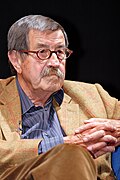
 Germany
Explanation
Günter Grass was a German writer who told playful yet slightly sarcastic stories. In his books, unusual heroes like a small boy or even a talking fish describe wars and people’s suffering in strange, gripping ways. For example, in “The Tin Drum” a boy pounding a drum watches Nazi-era Germany unfold. His tales bring back the feelings of people history almost forgot and teach important lessons to us today. Because of this, he received the world-famous Nobel Prize in Literature.
Related Keywords
Danzig Trilogy
A collective name for “The Tin Drum,” “Cat and Mouse,” and “Dog Years.” Set in the Free City of Danzig, the trilogy depicts ethnic tension and wartime violence through a child’s eyes. It highlights the intersection of local and global history, exposing the tangled relations between Polish and German communities. Polyphonic narration and temporal leaps characterize the books, turning them into literary experiments on reconstructing memory. The trilogy marks a watershed in post-war German representations of history.
The Tin Drum
Grass’s 1959 magnum opus. The protagonist Oskar stops growing at age three and uses his drum and shattering screams to narrate history. Unreliable narration and magical realism reveal both the madness and mundanity of the Nazi era. The novel was controversial for its bawdiness and political provocation, yet it achieved worldwide success. Volker Schlöndorff’s 1980 film adaptation won the Palme d’Or at Cannes.
Black fable
A phrase used by the Nobel Committee to describe Grass’s blend of playfulness and dark allegory. Borrowing structures from traditional folktales, he satirically critiques power and wartime violence. Humor lowers readers’ defenses, making the later revelation of historical tragedy more striking. The black fable quality links to grotesque body imagery and extravagant metaphors, leaving a complex aftertaste. This stylistic strategy influenced subsequent post-modern writers.
Postwar German literature
Refers to German-language writing after 1945, from Trümmerliteratur to new historical novels. Processing defeat and Holocaust memory forms its central concern, and Grass stood at the forefront of this debate. His texts often serve as prime examples of literary visualization of “coming to terms with the past.” Postwar literature experiments with language and metafiction to retell history, with Grass influencing successors like Herta Müller. It remains a major field in comparative literature.
Magical realism
A literary technique in which fantastical elements coexist naturally with reality. Famous in Latin American fiction, it is also employed by Grass to twist historical narration. Examples include Oskar’s glass-shattering scream or storytelling fish. The magical component visualizes the absurdity of history and opens new interpretive windows for readers. Critics view this strategy as a key to Grass’s international appeal.
Historical memory
A concept describing how societies remember and retell past events. Grass evokes forgotten perspectives and marginal voices, revealing the layers of memory. By employing child or animal narrators, he relativizes the tone of official history. His works show the political nature of memory, shaping historical awareness more affectively than monuments or textbooks. Scholars analyze him as a prime example of a “literary culture of memory.”
Satire
A form of expression that exposes social flaws and power contradictions through humor and irony. In Grass’s work, extreme exaggeration and black humor attack war guilt and authoritarianism. Readers laugh yet feel discomfort, prompting critical thought. Satire has historically spoken truth while evading censorship. Grass modernized this tradition, gaining a universality that resonates worldwide.
Vergangenheitsbewältigung
A term for Germany’s effort to cope with and understand its Nazi past. Grass addressed this issue early, advocating self-critical dialogue through literature. His works entangle personal and national responsibility, depicting complexities beyond simple perpetrator-victim binaries. Both his public statements and novels influenced political discourse, touching on legal reforms and educational curricula. The concept remains pivotal in contemporary memory-culture studies.