2005 Nobel Prize in Literature
Reason for Award
for plays that uncover the precipice beneath everyday prattle and force entry into oppression's closed rooms
Laureates
 United Kingdom of Great Britain and Northern Ireland
Explanation
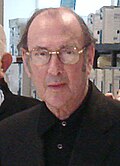
Harold Pinter is a playwright who finds hidden danger inside ordinary chat. People seem to be just talking in a normal room, yet the audience begins to feel nervous. It is like waiting in a dark room to see when the light will switch on. Pinter uses only a few words and creates tension with silences and long pauses. This special atmosphere is called “Pinteresque.” People all over the world are fascinated by his strange, exciting plays, and that is why he won the Nobel Prize.
Related Keywords
Pinteresque
A term that describes the unique blend of latent menace and comic everyday chat found in Pinter’s work; it is established enough to appear in major dictionaries. Core features include claustrophobic interiors, strategic silences, and sudden displays of violence or authority. Audiences experience anxiety without explicit explanation and fill narrative gaps with their own imagination. Directors and critics compete over how to realise this atmosphere on stage. In modern English, the word is also used metaphorically for other writers or films, making it a polyvalent cultural sign.
Pause
Explicit stage directions such as “Pause” or “Silence” instruct actors and directors to manipulate real time. The gap is designed not as an absence of meaning but as a space where audience tension peaks. Scholars have measured average durations and psychological impact through recordings and rehearsal observation. Drama pedagogy now teaches breath control and eye focus to execute these pauses, adding a new parameter to acting theory. After Pinter, many playwrights have consciously employed silence as a dramaturgical component.
Comedy of Menace
A phrase coined by critic Irving Wardle in his review of “The Birthday Party.” The audience laughs while simultaneously sensing that violence may erupt at any moment. The proximity of humour and fear functions as a political allegory, hinting at unseen forms of social oppression. The concept greatly influenced later black comedies and psychological thrillers. In literary studies it serves as a genre label, and in film theory it is cited as a descriptive category.
Theatre of the Absurd
A post-war avant-garde movement associated with Beckett and Ionesco that dismantles rational causality and portrays existential meaninglessness. Pinter was initially placed within this lineage, yet later diverged by targeting concrete power structures. Comparative studies focus on repeated dialogue patterns and fluid character identities as shared themes. The framework also serves as a yardstick for assessing Pinter’s uniqueness in theatre history.
Enclosed Space
Many Pinter plays restrict the setting to a single room, where isolation from the outside world generates psychological pressure. The scarcity of physical exits serves as a metaphor for power relations and constrains character behaviour. Because external information is withheld, audiences must focus on dialogue nuances, amplifying the power dynamics embedded in speech acts. Screen adaptations likewise favour closed sets.
Power Dynamics
Whether in domestic or political plays, Pinter depicts constant shifts between dominance and submission. Control of conversation, placement of chairs, or the act of serving food become signals of superiority. By tracking when the upper hand changes, audiences become aware of the mesh of power hidden in everyday actions. Critical literature often links this to Foucauldian theories of power.
Political Theatre
From the 1980s onward, Pinter focused on state torture, linguistic oppression, and critiques of war. “One for the Road,” set in an interrogation room, demonstrates how language functions as a weapon equal to physical violence. Audiences are forced to confront institutional cruelty and face ethical questions. The play is frequently used in productions by international human-rights groups, creating intersections with social activism.
Silence
Silence is itself a title of one of Pinter’s works, underscoring its thematic centrality. When dialogue stops, repressed memories and tensions surface, and audiences extract information beyond words. Sound designers often maintain faint ambient noise rather than absolute quiet to sustain tension. The device is analysed across linguistics, philosophy, and sound studies.