2006 Nobel Prize in Literature
Reason for Award
who, in the quest for the melancholic soul of his native city, has discovered new symbols for the clash and interlacing of cultures
Laureates
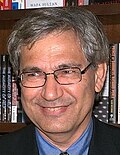
 Turkey
Explanation
Orhan Pamuk writes stories set in Istanbul, a city where Asia and Europe meet. Many different cultures live together there. Pamuk puts the quiet, sometimes sad feelings of people and the differences between East and West into his tales. By reading them, we can travel to places and times we have never seen. He often uses colors or everyday things, like the color red, to show a character’s feelings, almost like a picture book. As the stories go on, we learn that cultures can argue but also mix and become friends. His books teach us how to get along with friends from far-away places.
Related Keywords
Istanbul
Turkey’s largest city, where Eastern and Western civilizations intersect. Known historically as Byzantium and Constantinople, it carries a multilayered past. In Pamuk’s novels the city functions almost as a character, with stone buildings and Bosphorus fog symbolizing melancholy. Urban transformation mirrors the ambivalent effects of modernization and resonates with the characters’ inner lives. His detailed walking scenes serve as portals to spatial memory and the collective unconscious.
hüzün (collective melancholy)
A Turkish word denoting a spiritual and cultural melancholy. Pamuk employs it as a key concept to explain self-consciousness after the Ottoman decline and the faded beauty of Istanbul. While related to Sufi notions of sorrow, it also symbolizes modernity’s sense of loss. Within his fiction it connects characters’ emotions to urban scenery. Through hüzün, readers experience historical trauma and personal isolation simultaneously.
East–West crossroads
A metaphor for Istanbul’s historical role as a bridge between continents. Pamuk uses this setting to stage confrontations—Islamic art vs. Renaissance perspective, Sufism vs. Enlightenment thought, and more. Such clashes often lead to fluid identities and hybrid cultures. Readers are prompted to reconsider their own traditions from a relativized viewpoint. The concept also informs globalization studies.
postmodern novel
A literary mode prominent after the mid-20th century, marked by self-reference and fragmented chronology. Pamuk employs multiple narrators, pseudo-historical documents, and direct addresses to blur the line between fiction and reality. This strategy questions historical objectivity and authorial authority. Character identities remain unfixed, shifting with the reader’s interpretation. The form provides tools for interrogating truth in knowledge societies.
double identity
A state in which self and other overlap or exchange places. In “The White Castle” a Turk and a Venetian share identities like mirror images, dissolving East–West borders. The duality also hints at the internalization of colonial gaze and the semantic shifts produced by translation. It connects to contemporary migration literature and diaspora studies. Ultimately it asks readers what truly defines the self.
history of the Turkish Republic
Since its founding in 1923, the Turkish Republic has oscillated between secularism and Islamic revivalism. Pamuk situates military coups, the Kurdish issue, and rapid urbanization as narrative backdrops, revealing how personal choices are entangled in national currents. By intersecting historical fact with fiction, he exposes the manipulation of memory and restrictions on speech. Literature thus becomes a lens through which readers experience Turkey’s modern complexity.
metaphor and symbolism
Pamuk frequently employs concrete elements—colors, buildings, weather—as metaphoric devices. Red symbolizes passion and danger; snow evokes silence and self-reflection; fog denotes an uncertain future. Symbols shift meaning as the plot unfolds, allowing multilayered interpretation. His figurative techniques bridge Ottoman classical literature and Western modernist methods. By decoding symbols, readers actively participate in constructing the narrative world.