2020 Nobel Prize in Literature
Reason for Award
for her unmistakable poetic voice that with austere beauty makes individual existence universal
Laureates
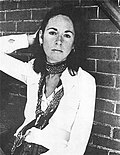
 United States of America
Explanation
Louise Glück is an American writer who creates poems. Her poems are short and quiet, yet they speak very strongly. She writes about things close to us, like family, seasons, and flowers. Readers can imagine their own stories while reading her lines. Even with few words, the feelings stay in our hearts. Because of this special style, she received the Nobel Prize in Literature.
Related Keywords
poetic voice
A term describing the unique narrative tone an author conveys to readers. It arises from word choice, rhythm, and the strategic use of silence. Glück forged a voice defined by minimalism and restraint that nevertheless renders sharp emotion. Her voice opens pathways from personal experience to the reader’s own memories and feelings. The Nobel Committee’s phrase “unmistakable poetic voice” refers to this simultaneous uniqueness and universality.
universality
A quality of literature that evokes empathy or insight beyond specific cultures or personal experiences. Glück uses family and myth to delve into psychological states shared across eras and borders. Readers discover common feelings that link self and other. Universality aligns with translatability, evidenced by the acclaim her works receive in many languages. It is a central criterion in Nobel Prize deliberations.
minimalism
An artistic approach that reduces elements to essentials, achieving impact through sparsity and silence. Glück’s poems use short lines and limited vocabulary to create spaces that activate readers’ imagination. Because meaning is not over-explained, multiple interpretations arise. Emotional force expands from the quiet between words rather than from overt rhyme or meter. Her concise style resonates with broader late-twentieth-century Anglophone poetic trends.
mythical motif
The use of stories or symbols borrowed from ancient myths or the Bible as structural elements of a work. Figures like Persephone or Dido become mirrors for modern selfhood in Glück’s poems. Myth offers readers familiar narrative frameworks that guide interpretation. Re-reading these myths generates new meaning, creating a dialogue between past and present. This technique is closely tied to intertextuality theory in literary studies.
autobiographical element
Portions of a work that incorporate the author’s own experiences or family history. Glück draws on childhood memories and parental relationships but strips away private specifics, leaving an emotional core. This encourages readers to project their own experiences. Autobiographical elements increase textual intimacy and credibility while blurring lines with fiction. In criticism, they are key to debates about continuity and rupture with confessional poetry.