1906 Nobel Prize in Physics
Reason for Award
for his theoretical and experimental investigations on the conduction of electricity by gases
Laureates
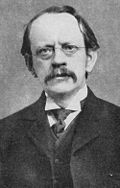
 United Kingdom of Great Britain and Northern Ireland
Explanation
The air we breathe usually does not let electricity pass. But if we use very strong electricity or a special glass tube, electricity can flow even through a gas. Professor Thomson pumped most of the air out of a glass tube, applied electricity, and saw glowing streaks and tiny particles. These particles were “electrons,” very small and light pieces carrying negative electric charge. He bent the particle beam with magnets and electric plates to study it and realized that electrons are basic building blocks of matter. His work later led to things like light bulbs, televisions, and computers that we use every day.
Related Keywords
electrical conduction in gases
A gas is normally an insulator, but when a strong electric field or radiation ionizes its atoms, free electrons and ions appear and the gas becomes conductive. Carrier mobility and production rates depend on pressure, temperature and field strength; Thomson and Townsend were the first to quantify these relations. Gas discharges exhibit spatial regions such as the dark space, negative glow and positive column, each with distinct carrier densities and electric-field profiles. Today the phenomenon underlies numerous applications including neon lamps, fluorescent tubes, plasma displays and gas lasers. Gas breakdown at high fields also forms the basis of insulation design for power transmission equipment and high-voltage engineering. By elucidating the fundamental physics, Thomson’s work marks the starting point of modern plasma science.
cathode rays
Cathode rays are invisible streams of particles emitted from the cathode in a low-pressure discharge tube and can make fluorescent materials glow. In the late 19th century scientists debated whether they were waves or particles, though their deflection by magnetic and electric fields hinted at charged particles. Thomson precisely measured the deflection and firmly established that cathode rays are a beam of negatively charged particles. These particles were later named “electrons,” the first subatomic particle ever discovered. Research on cathode rays evolved into electron-beam technologies such as electron microscopes, cathode-ray tubes and mass spectrometers. Their history is closely connected to the wave–particle duality of light and the development of quantum mechanics.
electron
The electron is a fundamental particle carrying a negative charge of −1.602×10^-19 C and a mass of 9.109×10^-31 kg, present in every atom. Its existence was first confirmed by Thomson’s gas-discharge experiments, demonstrating that matter has subatomic structure. Electrons govern chemical bonding, electric currents and magnetic phenomena. In quantum mechanics they exhibit wave-like behavior, forming the basis of band theory and semiconductor devices. At high energies they are used in synchrotron sources, electron-beam lithography and other advanced measurement and fabrication techniques. Owing to their universality and controllability, electrons remain central to 21st-century nanotechnology and quantum information research.
ionization
Ionization is the process by which a neutral atom or molecule gains or loses electrons and becomes charged. Strong electric fields, ultraviolet or X-ray photons, and particle collisions are major ionization mechanisms. Electrical conduction in gases relies on carrier generation by ionization; Thomson measured the threshold energy for collisional ionization. Many familiar phenomena, from lightning and aurorae to the glow of fluorescent lamps, are explained by ionization. In plasma physics, fusion research and astrophysics the ionization fraction is a key parameter governing transport and energy balance. Industrial applications include surface modification, semiconductor etching and medical sterilization.
discharge tube
A discharge tube is a sealed vessel, typically glass, fitted with electrodes in which the gas pressure can be controlled and a high voltage applied. Thomson improved the Crookes tube and observed the properties of the electron beam while varying the internal pressure. The colored glow seen in a discharge tube arises from excited gas molecules emitting light, providing clues for spectral analysis. Technologies such as X-ray generators, neon signs and plasma TV panels inherit the principles of discharge tubes. Different plasma characteristics, such as glow or arc discharge, can be produced by adjusting vacuum level, electrode geometry and materials. Many pivotal experiments in atomic and molecular physics in the 19th and early 20th centuries relied on discharge tubes.
charge-to-mass ratio
The charge-to-mass ratio e/m is a fundamental property of any charged particle, governing its motion in electromagnetic fields. Thomson determined the electron e/m from cathode-ray deflection, thereby identifying the first subatomic particle. The value of e/m is a critical parameter in the design of particle accelerators and the resolving power of mass spectrometers. Improved versions of the technique later revealed the existence of isotopes, enabling precise atomic-mass measurements. Today, Penning traps and cyclotron resonance methods measure e/m with extraordinary precision, testing fundamental physics constants. Thomson’s measurement approach bridged electromagnetism and atomic physics in a revolutionary way.
vacuum tube
A vacuum tube is a device in which electrons emitted from a cathode travel through vacuum; examples include diodes and triodes. Thomson’s electron-beam studies showed that electrons could be manipulated, forming the theoretical basis for inventions by Fleming and De Forest. Vacuum tubes were indispensable amplification and rectification elements in early 20th-century radio, telecommunications and computers. Concepts such as thermionic emission, space-charge-limited current and grid control trace their origin to Thomson’s work on gas and vacuum discharges. Although largely replaced by semiconductor devices, vacuum tubes persist in high-power transmitters, military radar and audio amplifiers. They are being re-examined from an electron-wave optics perspective and are finding applications in microwave devices and free-electron lasers.
plum-pudding model
The plum-pudding model, proposed by Thomson in 1904, envisioned the atom as a positively charged “pudding” in which the electrons, the “plums,” were uniformly embedded. At the time the atom was thought to be indivisible, but the discovery of the electron required a new internal structure. Although later disproved by Rutherford’s scattering experiment, the model was revolutionary in introducing spatial separation of positive and negative charge. As the first theoretical attempt to reconcile electron arrangement with overall atomic neutrality, it bridged to subsequent quantum atomic models. Pedagogically, it marks an essential step in the historical evolution of atomic theory. In the history of science it exemplifies how hypotheses are revised through experimental verification.