Nobel Prize in Physics
Established by the will of Alfred Nobel in 1895 and first awarded in 1901, the Nobel Prize in Physics is one of the original five Nobel Prizes. The Royal Swedish Academy of Sciences confidentially selects laureates from nominations and announces the winners each October. Up to three individuals may share the Prize. Laureates receive a gold medal, a diploma, and a monetary award. The award ceremony takes place annually on December 10 in Stockholm. The medal features Alfred Nobel’s portrait on the obverse and a depiction of the goddess of Science lifting the veil of Nature on the reverse.
227
Laureates
1901~
First awarded
Royal Swedish Academy of Sciences
Presented by
Prizes
View all laureates2024
for foundational discoveries and inventions that enable machine learning with artificial neural networks
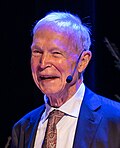
 United States of America
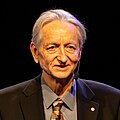
 United Kingdom of Great Britain and Northern Ireland
2023
for experimental methods that generate attosecond pulses of light for the study of electron dynamics in matter
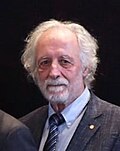
United States of America
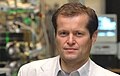
 Austria
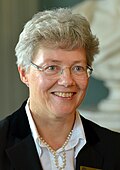
 Sweden
2022
for experiments with entangled photons, establishing the violation of Bell inequalities and pioneering quantum information science
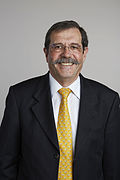
 France
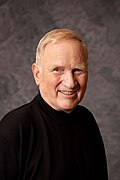
United States of America
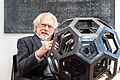
Austria
2021
for the physical modelling of Earth’s climate, quantifying variability and reliably predicting global warming
United States of America
 Germany
for the discovery of the interplay of disorder and fluctuations in physical systems from atomic to planetary scales
 Italy
Italy
2020
for the discovery that black hole formation is a robust prediction of the general theory of relativity
United Kingdom of Great Britain and Northern Ireland
for the discovery of a supermassive compact object at the centre of our galaxy
Germany
United States of America
2019
for theoretical discoveries in physical cosmology
United States of America
for the discovery of an exoplanet orbiting a solar-type star
 Switzerland
Switzerland
2018
for the development of optical tweezers and their application to biological systems

United States of America
for the development of a method for generating high-intensity, ultra-short laser pulses
France
 Canada
2017
for decisive contributions to the LIGO detector and the observation of gravitational waves
United States of America
United States of America

United States of America
2016
for theoretical discoveries of topological phase transitions and topological phases of matter
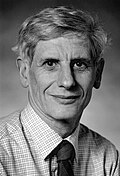
United Kingdom of Great Britain and Northern Ireland, United States of America
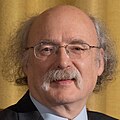
United Kingdom of Great Britain and Northern Ireland,  Slovenia
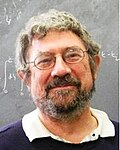
United Kingdom of Great Britain and Northern Ireland, United States of America
2015
for the discovery of neutrino oscillations, which shows that neutrinos have mass (Nucl. Phys. B-Proc. Suppl. 77 (1999) 123 〈Kajita〉, 43 〈McDonald〉)
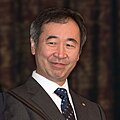
 Japan
Japan
Canada
2014
for the invention of efficient blue light-emitting diodes which have enabled bright and energy-saving white light sources
Japan
Japan
United States of America
2013
For the theoretical discovery of the Brout–Englert–Higgs mechanism, proposed in 1964, which explains how elementary particles acquire mass and was later confirmed by the observation of the Higgs boson by the ATLAS and CMS experiments at CERN’s Large Hadron Collider. The award cites the seminal papers Phys. Rev. Lett. 13 (1964) 321 (Englert & Brout), Phys. Rev. Lett. 13 (1964) 508 (Higgs), and Phys. Rev. 145 (1966) 1156 (Higgs).
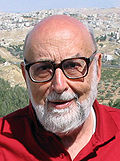
 Belgium
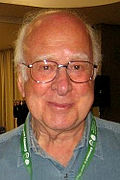
United Kingdom of Great Britain and Northern Ireland
2012
for ground-breaking experimental methods that enable measuring and manipulation of individual quantum systems
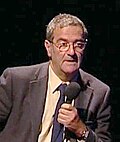
France
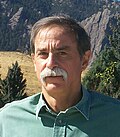
United States of America
2011
for the discovery of the accelerating expansion of the Universe through observations of distant supernovae (Astrophys. J.: 517 (1999) 565-586; Astrophys. J.: 507 (1998) 46-63; Astron. J.: 116 (1998) 1009-1038)
United States of America
 Australia, United States of America

United States of America
2010
for groundbreaking experiments regarding the two-dimensional material graphene
 Netherlands
 Russian Federation, United Kingdom of Great Britain and Northern Ireland
2009
for groundbreaking achievements concerning the transmission of light in fibers for optical communication
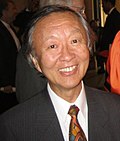
United Kingdom of Great Britain and Northern Ireland, United States of America
for the invention of an imaging semiconductor circuit – the CCD sensor
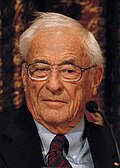
United States of America, Canada
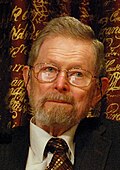
United States of America
2008
for the discovery of the mechanism of spontaneous broken symmetry in subatomic physics (Phys. Rev. 117 (1960) 648; Phys. Rev. 122 (1961) 345-358; Phys. Rev. 124 (1961) 246-254)
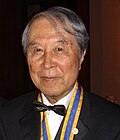
United States of America
for the discovery of the origin of the broken symmetry which predicts the existence of at least three families of quarks in nature (Progress of Theoretical Physics 49 (1973) 652-657)
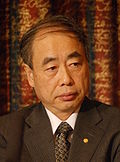
Japan
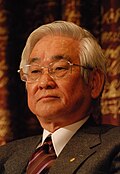
Japan
2007
Discovery of Giant Magnetoresistance (GMR). Key papers: M.N. Baibich et al., Phys. Rev. Lett. 61 (1988) 2472–2475 (Fert group) and G. Binasch et al., Phys. Rev. B 39 (1989) 4828–4830 (Grünberg group).
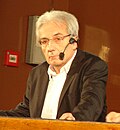
France
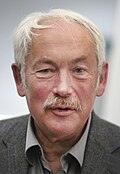
Germany
2006
for the discovery of the black-body form and anisotropy of the cosmic microwave background radiation (Astrophys. J. 420 (1994) 439-444; Astrophys. J. 464 (1996) L1-L4)
United States of America
United States of America
2005
For his contribution to the quantum theory of optical coherence. In a series of papers, including Phys. Rev. Lett. 10 (1963) 84-86, Phys. Rev. 130 (1963) 2529-2539, and Phys. Rev. 131 (1963) 2766-2788, he created a consistent framework that treats light as both particles and waves.
United States of America
For their contributions to the development of laser-based precision spectroscopy, including the optical frequency comb technique. Through papers such as Science 288 (2000) 635-639, Rev. Sci. Instrum. 72 (2001) 3749-3771, and Phys. Rev. Lett. 87 (2001) 270801, they connected optical frequencies across the visible and infrared ranges to absolute references.
United States of America
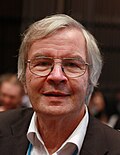
Germany
2004
for the theoretical discovery of asymptotic freedom in the theory of the strong interaction, as reported in a series of papers (Phys. Rev. Lett. 30 (1973) 1343–1346; Phys. Rev. D 8 (1973) 3633–3652; Phys. Rev. D 9 (1974) 980–993; Phys. Rev. Lett. 30 (1973) 1346–1349; Phys. Rep. 14 (1974) 129–180).
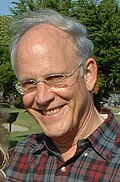
United States of America
United States of America
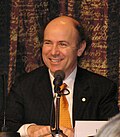
United States of America
2003
for pioneering contributions to the theory of superconductors and superfluids (Sov. Phys. JETP 5 (1957) 1174–1182; Zh. Eksp. Teor. Fiz. 32 (1957) 1442–1452; Zh. Eksp. Teor. Fiz. 20 (1950) 1064–1082; Phys. Rev. 140 (1965) A1869–A1888; Phys. Rev. 147 (1966) 119–130; Phys. Rev. Lett. 29 (1972) 1227–1230; Phys. Rev. Lett. 31 (1973) 352–355; Rev. Mod. Phys. 47 (1975) 331–414; Phys. Rev. Lett. 46 (1981) 211–214)
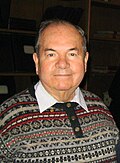
United States of America, Russian Federation
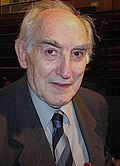
Russian Federation
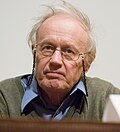
United Kingdom of Great Britain and Northern Ireland, United States of America
2002
for pioneering contributions to astrophysics, in particular for the detection of cosmic neutrinos
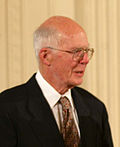
United States of America
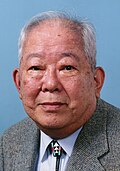
Japan
for pioneering contributions to astrophysics, which led to the discovery of cosmic X-ray sources

United States of America
2001
for the achievement of Bose–Einstein condensation in dilute gases of alkali atoms and for early fundamental studies of the properties of the condensates (Science 269, 198–201, 1995; Phys. Rev. Lett. 77, 420–423, 1996; Phys. Rev. Lett. 75, 3969–3973, 1995).

United States of America
Germany

United States of America
2000
for basic work on information and communication technology (for developing semiconductor heterostructures used in high-speed and opto-electronics)
Russian Federation
Germany
for basic work on information and communication technology (for his part in the invention of the integrated circuit)
United States of America
1999
for elucidating the quantum structure of electroweak interactions in physics (Nucl. Phys. B7 (1968) 637-650, B33 (1971) 173-199, B35 (1971) 167-188, B44 (1972) 189-213, B50 (1972) 318-353)
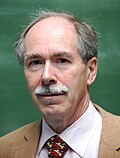
Netherlands
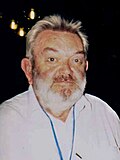
Netherlands
1998
for the discovery of a new form of quantum fluid with fractionally charged excitations
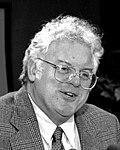
United States of America
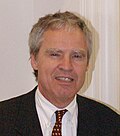
Germany

United States of America
1997
for the development of methods to cool and trap atoms with laser light

United States of America
France
United States of America
1996
for their discovery of superfluidity in helium-3 (Phys. Rev. Lett. 28, 885–888 (1972); Phys. Rev. Lett. 29, 920–923 (1972); Phys. Rev. A 8, 1633–1637 (1973))
United States of America
United States of America
United States of America
1995
Pioneering experimental contributions to lepton physics (discovery of the tau lepton) Phys. Rev. Lett. 35 (1975) 1489–1492, Phys. Lett. B 63 (1976) 466–470
United States of America
Pioneering experimental contributions to lepton physics (detection of the neutrino) Science 124 (1956) 103–104
United States of America
1994
for pioneering contributions to the development of neutron scattering techniques for studies of condensed matter (development of neutron spectroscopy) Phys. Rev. 111(1958) 747-754; Rev. Mod. Phys. 30(1958) 236-249 (erratum 30(1958) 1177); Phys. Rev. Lett. 2(1959) 256-258; Phys. Rev. 119(1960) 980-999
Canada
for pioneering contributions to the development of neutron scattering techniques for studies of condensed matter (development of the neutron diffraction technique) Phys. Rev. 76(1949) 1256-1257; Phys. Rev. 81(1951) 527-535; Phys. Rev. 83(1951) 333-345; Rev. Mod. Phys. 25(1953) 100-107; Phys. Rev. 97(1955) 304-310
United States of America
1993
for the discovery of a new type of pulsar, a discovery that has opened up new possibilities for the study of gravitation (Astrophys. J. Lett. 195 (1975) L51-L53; Astrophys. J. Lett. 206 (1976) L53-L58; Astrophys. J. 253 (1982) 908-920; Philos. Trans. R. Soc. Lond. A 341 (1992) 117-134; Phys. Rev. D 45 (1992) 1840-1868)
United States of America

United States of America
1992
for his invention and development of particle detectors, in particular the multiwire proportional chamber
France
1991
for discovering that methods developed for studying order phenomena in simple systems can be generalized to more complex forms of matter, in particular to liquid crystals and polymers
France
1990
for their pioneering investigations concerning deep inelastic scattering of electrons on protons and bound neutrons, which have been of essential importance for the development of the quark model in particle physics
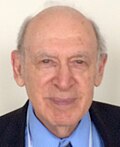
United States of America

United States of America
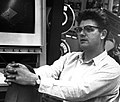
Canada
1989
for the invention of the separated oscillatory fields method and its application to the hydrogen maser and other atomic clocks (Phys. Rev. 76 (1949) 996; 78 (1950) 695–703; 126 (1962) 603–615, etc.)
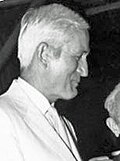
United States of America
for the development of the ion trap technique (Phys. Rev. Lett. 41 (1978) 233-236; Phys. Rev. A 22 (1980) 1137-1140, etc.)
United States of America
 West Germany
1988
for the neutrino beam method and the demonstration of the doublet structure of the leptons through the discovery of the muon neutrino
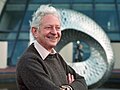
United States of America
United States of America
United States of America
1987
for their important breakthrough in the discovery of superconductivity in ceramic materials (Zeitschrift für Physik B 64 (1986) 189–193, Bednorz & Müller)
West Germany
Switzerland
1986
for his fundamental work in electron optics, particularly for the design of the first electron microscope
West Germany
for their design of the scanning tunneling microscope
West Germany
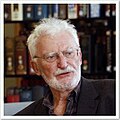
Switzerland
1985
for the discovery of the quantized Hall effect (Phys. Rev. Lett. 45, 494–497, 1980; Metrologia 21, 11–19, 1985)
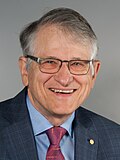
West Germany
1984
for their decisive contributions to the large project that led to the discovery of the W and Z particles, mediators of the weak interaction
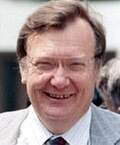
Italy
Netherlands
1983
for his theoretical studies of the physical processes of importance to the structure and evolution of the stars (Philos. Mag. 11 (1931) 592; Astrophys. J. 74 (1931) 81; Astrophys. J. 96 (1942) 161)
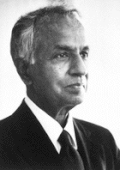
United States of America
for his theoretical and experimental studies of the nuclear reactions of importance in the formation of the chemical elements in the universe (Rev. Mod. Phys. 29 (1957) 547-650)
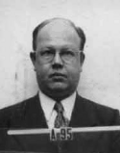
United States of America
1982
for his theory for critical phenomena in connection with phase transitions (Phys. Rev. B 4, 3174-3183 (1971); Phys. Rev. B 4, 3184-3205 (1971); Phys. Rev. Lett. 28, 240-243 (1972); Phys. Rev. Lett. 28, 548-551 (1972); Phys. Rep. 12, 75-199 (1974); Rev. Mod. Phys. 47, 773-840 (1975))
United States of America
1981
for their contribution to the development of laser spectroscopy (Phys. Rev. 104 (1956) 324-327, Phys. Rev. 127 (1962) 1918-1939)
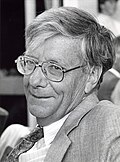
United States of America
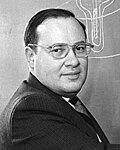
United States of America
for the development of high-resolution electron spectroscopy

Sweden
1980
for the discovery of violations of fundamental symmetry principles in the decay of neutral K-mesons
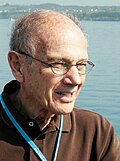
United States of America
United States of America
1979
for their contributions to the theory of the unified weak and electromagnetic interaction between elementary particles, in particular the prediction of the weak neutral current
United States of America
 Pakistan
United States of America
1978
for his basic inventions and discoveries in the area of low-temperature physics
 Soviet Union
for their discovery of cosmic microwave background radiation (Astrophys. J. 142 (1965) 419)
United States of America
United States of America
1977
for their fundamental theoretical investigations of the electronic structure of magnetic and disordered systems
United States of America
United Kingdom of Great Britain and Northern Ireland
United States of America
1976
for their pioneering work leading to the discovery of a new, heavy elementary particle, the J/ψ meson (Phys. Rev. Lett. 33 (1974) 1404-1406, 1406-1408, 1408-1410 and related papers; early hint in Phys. Rev. Lett. 25 (1970) 1523-1526).
United States of America
United States of America
1975
for the discovery of the connection between collective motion and particle motion in atomic nuclei and the development of the theory of the structure of the atomic nucleus based on this connection
 Denmark
Denmark

United States of America
1974
for his pioneering research in radio astrophysics, especially his observations and inventions related to the aperture-synthesis technique
United Kingdom of Great Britain and Northern Ireland
for his pioneering research in radio astrophysics, particularly for his decisive role in the discovery of pulsars
United Kingdom of Great Britain and Northern Ireland
1973
for their experimental discoveries regarding tunneling phenomena in semiconductors and in superconductors, respectively (Phys. Rev. Lett. 5 (1960) 147-148; 464-466)
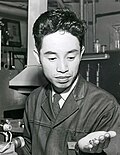
Japan
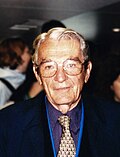
United States of America
for his theoretical predictions of the properties of a supercurrent through a tunnel junction, in particular those phenomena known as the Josephson effects (Phys. Lett. 1 (1962) 251-253; Adv. Phys. 14 (1965) 419)
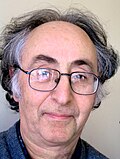
United Kingdom of Great Britain and Northern Ireland
1972
for their jointly developed theory of superconductivity, usually called the BCS theory (Phys. Rev. 108, 1175-1204, 1957)
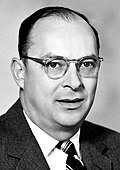
United States of America
United States of America
United States of America
1971
for his invention and development of the holographic method (Nature 161 (1948) 777–779, Proc. Roy. Soc. A 197 (1949) 454, Proc. Phys. Soc. B 64 (1951) 449)
United Kingdom of Great Britain and Northern Ireland
1970
for fundamental work and discoveries in magnetohydro-dynamics with fruitful applications in different parts of plasma physics
Sweden
for fundamental work and discoveries concerning antiferromagnetism and ferrimagnetism which have led to important applications in solid state physics
France
1969
for his contributions and discoveries concerning the classification of elementary particles and their interactions (Phys. Rev. 92 (1953) 833-834, Phys. Rev. 125 (1962) 1067-1084, Phys. Lett. 8 (1964) 214-215)
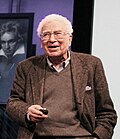
United States of America
1968
for his decisive contributions to elementary particle physics, in particular the discovery of a large number of resonance states made possible through his development of the technique of using hydrogen bubble chamber and data analysis
United States of America
1967
for his contributions to the theory of nuclear reactions, especially his discoveries concerning the energy production in stars
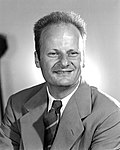
United States of America
1966
for the discovery and development of optical methods for studying Hertzian resonances in atoms
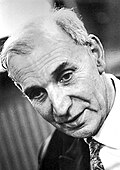
France
1965
for their fundamental work in quantum electrodynamics, with deep-ploughing consequences for the physics of elementary particles
Japan
United States of America
United States of America
1964
for fundamental work in the field of quantum electronics, which has led to the construction of oscillators and amplifiers based on the maser-laser principle
United States of America
Soviet Union
Soviet Union
1963
for his contributions to the theory of the atomic nucleus and the elementary particles, particularly through the discovery and application of fundamental symmetry principles
United States of America
for their discoveries concerning nuclear shell structure
United States of America
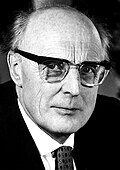
West Germany
1962
for his pioneering theories for condensed matter, especially liquid helium
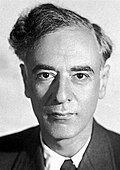
Soviet Union
1961
for his pioneering studies of electron scattering in atomic nuclei and the resulting discoveries concerning the structure of the nucleons (Phys. Rev. Lett. 5 (1960) 263–265; Phys. Rev. Lett. 6 (1961) 293–296)
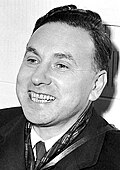
United States of America
for his researches concerning the resonance absorption of gamma radiation and his discovery in this connection of the effect which bears his name (the Mössbauer effect)
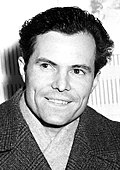
West Germany
1960
for the invention of the bubble chamber, Phys. Rev. 87 (1952) 665-665
United States of America
1959
for the discovery of the antiproton (Phys. Rev. 100 (1955) 947-950)
United States of America
United States of America
1958
for the discovery and the interpretation of the Cherenkov effect (C.R. Acad. Sci. USSR: 2 (1934) 451; 14 (1937) 107)
Soviet Union
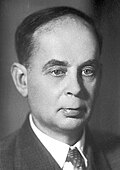
Soviet Union
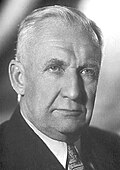
Soviet Union
1957
for their penetrating investigation of the so-called parity laws, which led to important discoveries regarding elementary particles (Phys. Rev. 104 (1956) 254-258; Phys. Rev. 106 (1957) 340-345; Phys. Rev. 105 (1957) 1413-1417)
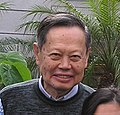
United States of America

United States of America
1956
for their researches on semiconductors and their discovery of the transistor effect
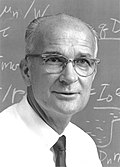
United States of America
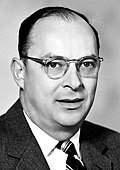
United States of America
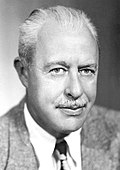
United States of America
1955
for his discoveries concerning the fine structure of the hydrogen spectrum
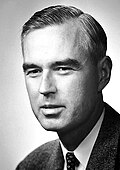
United States of America
for his precision determination of the magnetic moment of the electron
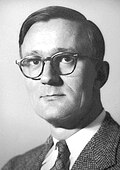
United States of America
1954
for his fundamental research in quantum mechanics, especially for his statistical interpretation of the wavefunction
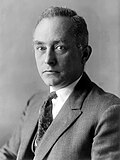
United Kingdom of Great Britain and Northern Ireland
for the coincidence method and his discoveries made therewith
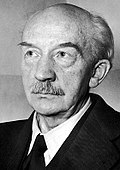
West Germany
1953
for his demonstration of the phase-contrast method, especially for his invention of the phase-contrast microscope
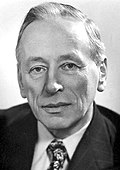
Netherlands
1952
for their development of new methods for nuclear magnetic precision measurements and discoveries in connection therewith
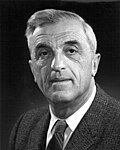
Switzerland
United States of America
1951
for their pioneer work on the transmutation of atomic nuclei by artificially accelerated atomic particles
United Kingdom of Great Britain and Northern Ireland
 Ireland
1950
for his development of the photographic method of studying nuclear processes and his discoveries regarding mesons made with this method
United Kingdom of Great Britain and Northern Ireland
1949
for his prediction of the existence of mesons on the basis of theoretical work on nuclear forces (Proc. Phys. Math. Soc. Jap. 17, 48 (1935))
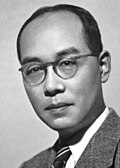
Japan
1948
for his development of the Wilson cloud chamber method and his discoveries therewith in the fields of nuclear physics and cosmic radiation
United Kingdom of Great Britain and Northern Ireland
1947
for his investigations of the physics of the upper atmosphere, especially for the discovery of the so-called Appleton layer
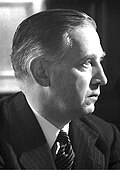
United Kingdom of Great Britain and Northern Ireland
1946
for the invention of an apparatus to produce extremely high pressures, and for the discoveries he made therewith in the field of high pressure physics
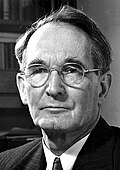
United States of America
1945
for the discovery of the Exclusion Principle, also called the Pauli Principle (original paper: Zeitschrift für Physik 31 (1925) 765-783)
United States of America
1944
for his resonance method for recording the magnetic properties of atomic nuclei
United States of America
1943
for his contribution to the development of the molecular ray method and his discovery of the magnetic moment of the proton
United States of America
1939
for the invention and development of the cyclotron and for the results obtained with it, especially with regard to artificial radioactive elements
United States of America
1938
for his demonstrations of the existence of new radioactive elements produced by neutron irradiation, and for his related discovery of nuclear reactions brought about by slow (thermal) neutrons
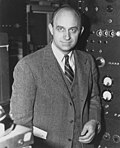
 Kingdom of Italy
1937
for their experimental discovery of the diffraction of electrons by crystals
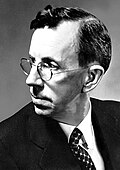
United States of America
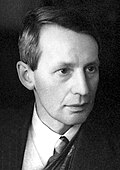
United Kingdom of Great Britain and Northern Ireland
1936
for the discovery of cosmic rays (Phys. Z.:13(1912) 1084-1091)
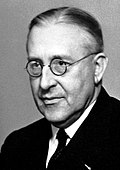
Austria
for the discovery of the positron (Phys. Rev.:43(1933) 491-498; Phys. Rev.:44(1933) 406-423)
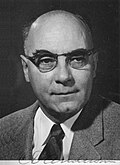
United States of America
1935
for the discovery of the neutron (Nature 129 (1932) 312)
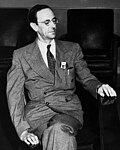
United Kingdom of Great Britain and Northern Ireland
1933
for the discovery of new productive forms of atomic theory. Key papers: E. Schrödinger, Phys. Rev. 28 (1926) 1049-1070; P. A. M. Dirac, Proc. R. Soc. Lond. A 117 (1928) 610-624; 118 (1928) 351-361; 133 (1931) 60-72
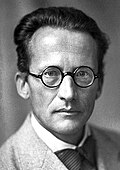
Austria
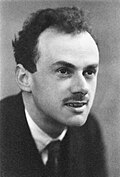
United Kingdom of Great Britain and Northern Ireland
1932
for the creation of quantum mechanics, the application of which has, inter alia, led to the discovery of the allotropic forms of hydrogen
 German Reich
1930
for his work on the scattering of light and for the discovery of the Raman effect named after him
 British Indian Empire
1929
for his discovery of the wave nature of electrons
France
1928
for his work on the thermionic phenomenon and especially for the discovery of the law named after him (Richardson’s law)
United Kingdom of Great Britain and Northern Ireland
1927
for his discovery of the Compton effect, named after him
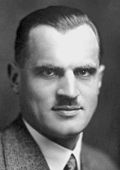
United States of America
for his invention of the cloud chamber, a method of making the paths of electrically charged particles visible by condensation of vapour
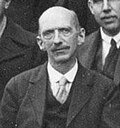
United Kingdom of Great Britain and Northern Ireland
1926
for his work on the discontinuous structure of matter, and especially for his discovery of sedimentation equilibrium (Ann. de Chim. et de Phys., 8th series, 18 (1909) 5-114)
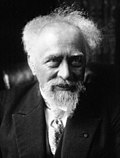
France
1925
for their discovery of the laws governing the impact of an electron upon an atom
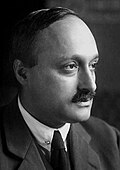
German Reich
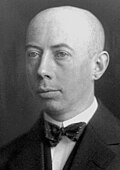
German Reich
1924
for his discoveries and research in the field of X-ray spectroscopy
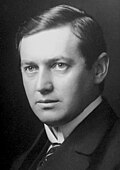
Sweden
1923
for his work on the elementary charge of electricity and on the photoelectric effect (e.g., Phys. Mag. XIX:6 (1910) 209; Phys. Rev. 2 (1913) 109-143)
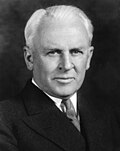
United States of America
1922
for his services in the investigation of the structure of atoms and of the radiation emanating from them
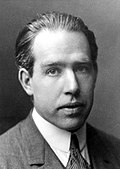
Denmark
1921
for his services to theoretical physics, and especially for his discovery of the law of the photoelectric effect
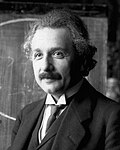
Switzerland
1920
for the discovery of the Invar alloy and its subsequent development of precision measurement
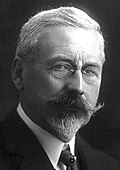
Switzerland
1919
for his discovery of the Doppler effect in canal rays and the splitting of spectral lines in electric fields
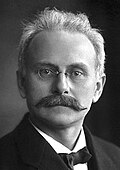
German Reich
1918
for the services he rendered to the advancement of Physics by his discovery of energy quanta (Annalen der Physik 1 (1900) 719; 4 (1901) 553)
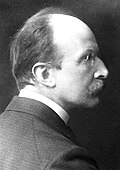
 German Empire
1917
for his discovery of the characteristic X-ray radiation of the elements
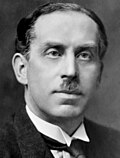
United Kingdom of Great Britain and Northern Ireland
1915
for their services in the analysis of crystal structure by means of X-rays
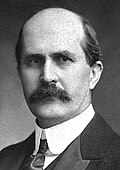
United Kingdom of Great Britain and Northern Ireland
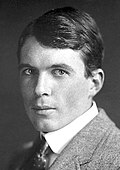
United Kingdom of Great Britain and Northern Ireland
1914
for his discovery of the diffraction of X-rays by crystals
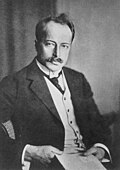
German Empire
1913
for his investigations on the properties of matter at low temperatures which led, inter alia, to the production of liquid helium
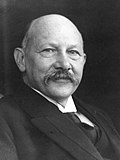
Netherlands
1912
for his invention of automatic regulators for use in conjunction with gas accumulators for illuminating lighthouses and buoys
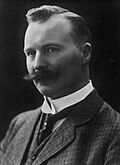
Sweden
1911
for his discoveries regarding the laws governing the radiation of heat
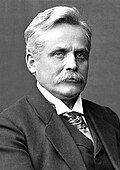
German Empire
1910
for his work on the equation of state for gases and liquids
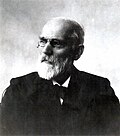
Netherlands
1909
for their contributions to the development of wireless telegraphy
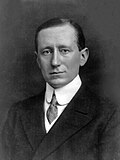
Kingdom of Italy
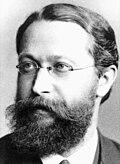
German Empire
1908
for his method of reproducing colours photographically based on the phenomenon of interference (Lippmann colour photography)
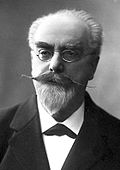
France
1907
for his optical precision instruments—especially the Michelson interferometer—and the spectroscopic and metrological investigations carried out with their aid
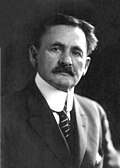
United States of America
1906
for his theoretical and experimental investigations on the conduction of electricity by gases
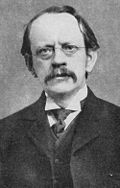
United Kingdom of Great Britain and Northern Ireland
1905
for his work on cathode rays
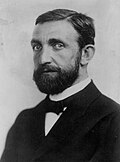
German Empire
1904
for his investigations of the densities of the most important gases and for his discovery of argon in connection with these studies
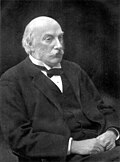
United Kingdom of Great Britain and Northern Ireland
1903
for the discovery of spontaneous radioactivity
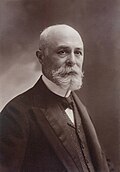
France
for their joint researches on the radiation phenomena discovered by Professor Henri Becquerel
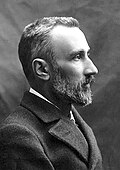
France
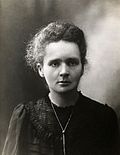
France
1902
for their researches into the influence of magnetism upon radiation phenomena
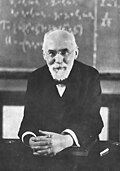
Netherlands
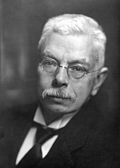
Netherlands
1901
for the discovery of the remarkable radiation later named X-rays (Nature 53 (1896) 274–276)
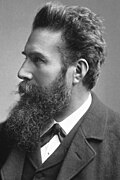
German Empire