1943 Nobel Prize in Physics
Reason for Award
for his contribution to the development of the molecular ray method and his discovery of the magnetic moment of the proton
Laureates
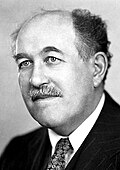
 United States of America
Explanation
1. All around us, tiny invisible particles are flying about. 2. Dr. Stern invented a way to tame those particles by letting them pass through a narrow tube and form a straight “molecular beam.” 3. When he placed a magnet near the beam, the particles bent to the left or right, showing that each particle behaves like a tiny magnet. 4. He studied a particle called the “proton,” which sits at the center of a hydrogen atom, and was the first to measure how strong its little magnet is. 5. Knowing these properties helps engineers build devices like radios and MRI scanners that we use every day. 6. That is why his work, which makes the invisible world clearer, is so important for science and technology.
Related Keywords
molecular beam method
The molecular beam method shoots atoms or molecules through collimators as a narrow beam in vacuum and observes their response to external fields. Because the particles rarely collide with walls or each other, their internal quantum states are preserved, enabling high-precision spectroscopy and dynamics studies. Developed by Stern, the technique achieved spatial separation of quantum states and gave direct evidence for spin and magnetic moments. Later refinements, such as Rabi’s magnetic resonance and atomic clocks, trace their roots to the molecular beam method and underpin modern quantum technologies. When combined with cooling and slowing techniques, the method is applied to neutral-atom interferometers, EDM searches, and explorations beyond the Standard Model.
magnetic moment of the proton
A magnetic moment expresses how strongly a particle behaves like a tiny magnet; for the proton it is about 2.79 μ_N, where μ_N denotes the nuclear magneton. Stern’s measurement showed this value is larger than early theoretical expectations, providing the first hint that the nucleus is not a point-like particle. An accurate magnetic moment sets the resonance frequency in NMR and MRI machines, making it indispensable in medical diagnostics and materials science. Today the proton moment is measured in Penning traps with 10⁻⁹ precision, contributing to stringent tests of fundamental physics. It remains a benchmark for theories describing electromagnetic interactions and radiative corrections.
Stern–Gerlach experiment
In the 1922 Stern–Gerlach experiment, a beam of silver atoms was sent through an inhomogeneous magnetic field and observed to split into two distinct parts. The result demonstrated that angular momentum is quantized rather than continuous, providing decisive evidence for the emerging quantum theory. The experiment implied the existence of electron spin, an intrinsic two-valued degree of freedom of ½ ħ. The same principle underlies spin polarization in MRI, spintronics devices, and the manipulation of quantum bits. Even today it appears in every quantum-physics textbook as an iconic pedagogical experiment.
atomic magnetic resonance
Atomic magnetic resonance occurs when a high-frequency magnetic field flips the spin orientation of atoms or ions in an external magnetic field. Rabi built this technique on the molecular beam method, enabling extremely precise measurements of internal energy splittings. Consequently, hyperfine constants and magnetic moments were determined at the 10⁻⁸ level, paving the way for atomic clocks. Modern NMR, ESR, and MRI technologies all exploit atomic magnetic resonance and are widely used in medicine, biochemistry, and quantum information. As the precision improves, the method is increasingly applied to basic research probing weak interactions and novel symmetries.
fundamental physical constants
Fundamental physical constants are universal values such as the electric charge, the speed of light, and Planck’s constant. Constants determined with high precision, like the proton magnetic moment, are indispensable for testing physical laws and defining measurement units. Whether theory can correctly relate these constants is a touchstone for the validity of the Standard Model and quantum electrodynamics. The latest CODATA values aggregate results from many international experiments and are used to redefine SI base units such as the metre and the kilogram. State-of-the-art measurements employ laser spectroscopy, trapped-particle experiments, and interferometry, tracing their lineage back to Stern’s precision molecular-beam work.
particle spin
Spin is the quantum-mechanical intrinsic angular momentum of a particle; unlike classical rotation, it nevertheless generates a magnetic moment. Both electrons and protons have spin ½, leading to two possible orientations in a magnetic field, which causes beam splitting and resonance phenomena. The Stern–Gerlach experiment revealed the existence of spin and motivated the incorporation of spin matrices into quantum-mechanical formalism. Research on spin-dependent interactions drives innovations in magnetism, spintronics, and quantum information technologies. High-precision spin measurements also play a key role in experiments probing dark matter and violations of CPT symmetry.