1958 Nobel Prize in Physics
Reason for Award
for the discovery and the interpretation of the Cherenkov effect (C.R. Acad. Sci. USSR: 2 (1934) 451; 14 (1937) 107)
Laureates
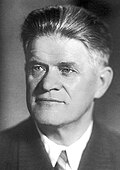
 Soviet Union
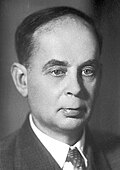
Soviet Union
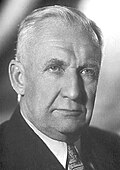
Soviet Union
Explanation
Have you ever seen a picture of a swimming-pool glowing blue? That blue glow is called “Cherenkov light.” It appears when a very fast particle moves through water faster than light can travel in water. Cherenkov and his colleagues were the first to notice this strange light and to explain why it happens. Just like a rocket makes a loud boom when it breaks the sound barrier, a particle makes a “light shock wave” when it breaks the light speed barrier in a liquid. Today, scientists use this light to study cosmic particles and to keep nuclear reactors safe.
Related Keywords
Cherenkov effect
The Cherenkov effect is the cone-shaped electromagnetic emission produced when a charged particle moves through a medium faster than the local phase velocity of light. Its angle depends on the medium’s refractive index and the particle’s speed, and its spectrum is weighted toward shorter wavelengths. It manifests as the blue glow in reactor pools and as light rings in cosmic-ray detectors, providing a tool for determining particle velocity and identity. Pavel Cherenkov observed it experimentally in 1934, and Frank and Tamm provided the theoretical explanation in 1937. Today the effect finds applications ranging from particle physics to medical imaging.
refractive index
The refractive index quantifies how much light slows down in a medium and equals the ratio of the vacuum speed of light to the phase velocity in the material. Water’s refractive index is about 1.33, making it a key determinant of the Cherenkov threshold. Because the index rises toward the ultraviolet, Cherenkov light appears bluish. By choosing media such as glass or plastics with specific indices, engineers tune the threshold in RICH detectors. Measuring refractive index is also fundamental in optics, chemical analysis, and geoscience.
superluminal propagation (in medium)
Superluminal propagation in a medium occurs when a particle’s speed exceeds c/n, the speed of light in that material, without violating special relativity because the vacuum speed c remains the universal limit. During such motion, the particle’s electromagnetic field polarizes atoms in the medium and produces coherent radiation. This process constitutes the essence of Cherenkov emission, whose energy loss and angular distribution are governed by the Frank–Tamm formula. The concept of superluminal motion in media also informs studies of plasmon excitation and femtosecond laser filaments.
water Cherenkov detector
A water Cherenkov detector fills a large tank with ultra-pure water and lines the interior with photomultiplier tubes to record Cherenkov light. When a neutrino interacts in the water and produces an electron or muon, that secondary particle emits Cherenkov radiation that can be detected. By reconstructing the light pattern, scientists determine the particle’s direction and energy; iconic examples include Super-Kamiokande and IceCube. Detection efficiency depends strongly on water transparency, PMT quantum efficiency, and dark noise. Although challenges include procuring large water volumes and suppressing background radiation, the technique is relatively inexpensive and easily scalable.
blue glow
The “blue glow” is the visually striking manifestation of Cherenkov light often seen in reactor pools. Because the emission spectrum is weighted toward shorter wavelengths and water absorbs ultraviolet strongly, the remaining light appears blue. The glow serves as a visible sign of radiation presence, assisting in safety monitoring and educational demonstrations. Although picturesque in photographs, it indicates an intense radiation field and must be treated with caution. Similar glows can appear in industrial accelerators and medical research facilities.
high-energy cosmic rays
High-energy cosmic rays are particles from space with energies from GeV to beyond EeV, consisting mainly of protons and atomic nuclei. When they enter Earth’s atmosphere, they produce extensive air showers whose secondary particles emit Cherenkov light in air, water, or ice. Ground-based, seabed, and ice-sheet Cherenkov detectors use this light to study high-energy gamma rays and neutrinos indirectly. Proposed cosmic-ray sources include supernova remnants and active galactic nuclei, and unraveling their acceleration mechanisms is a major goal of modern astrophysics. Cherenkov techniques are among the principal tools for addressing this goal.
Super-Kamiokande
Super-Kamiokande is a 50-kton class water Cherenkov detector 1 km underground in the Kamioka mine, Gifu, Japan, equipped with over 30,000 photomultiplier tubes. It is famous for the 1998 discovery of atmospheric neutrino oscillations, proving that neutrinos have mass. The central tank measures 39 m in diameter and 41 m in height, with stringent radiation controls to maintain ultra-low background. The detector is used for solar and supernova neutrino studies, proton-decay searches, and indirect dark-matter detection. Analysis of Cherenkov ring patterns provides robust electron-muon discrimination.