1968 Nobel Prize in Physics
Reason for Award
for his decisive contributions to elementary particle physics, in particular the discovery of a large number of resonance states made possible through his development of the technique of using hydrogen bubble chamber and data analysis
Laureates
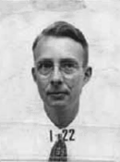
 United States of America
Explanation
To find out how very tiny particles move, Dr. Alvarez built a clear tank filled with liquid hydrogen. When a particle passed through, it left thin lines of bubbles. By taking pictures of those lines and measuring their paths, scientists could tell what kind of particle had flown by. New line patterns meant new kinds of particles nobody had seen before. It is like watching an ant trail with a magnifying glass and learning about ants from their footprints in the sand. This clever method earned him the Nobel Prize.
Related Keywords
bubble chamber
A detector that keeps a liquid in a superheated state; when a charged particle passes, localized boiling forms a string of bubbles. Stereo photographs allow three-dimensional track reconstruction. Although very intuitive and popular in education, the labour of filming and developing led to a transition toward electronic detectors. Alvarez built a large hydrogen version, reducing secondary reactions and simplifying analysis.
resonance state
An excited hadronic state with an extremely short lifetime, characterized by a width Γ. In bubble chambers it appears as a Breit-Wigner peak in the reconstructed invariant mass of decay products. Systematic discovery of resonances enabled the grouping of particles (Δ, Σ series, etc.) and provided evidence for the quark model and SU(3) symmetry. Measuring their widths and spins offers insight into strong-interaction dynamics.
elementary particle physics
The field studying the smallest building blocks of matter and the forces acting between them. In the mid-20th century, many hadrons were discovered, creating the so-called “particle zoo.” Alvarez’s work helped organize this zoo, laying foundations for today’s Standard Model. The discipline relies on large accelerators, sophisticated detectors, and precise comparison with theory.
particle detector
A general name for devices that record the passage of radiation or particles as electrical or optical signals. Technologies range from bubble and cloud chambers to proportional counters and silicon strip detectors. Efficiency, time resolution, spatial resolution, and data throughput have improved with advances, enabling applications not only in physics but also in medicine and cosmic-ray observation.
data analysis
The process of organizing large amounts of measurement data to reconstruct physical quantities. Alvarez introduced early electronic computers to digitize bubble-track curvature and quickly estimate masses and momenta, a pioneering approach that foreshadowed modern machine learning and statistical modeling. Accurate error estimation and bias removal are key to scientific reliability.
hadron
Composite particles that feel the strong interaction and consist of quarks. They are classified into baryons (protons, neutrons, etc.) and mesons (pions, etc.). The diversity of resonance states provided clues to the internal structure of hadrons and led to the quark model. Searches for exotic hadrons continue at experiments like LHCb and Belle II.
synchrotron accelerator
An accelerator that increases the energy of charged particles while they circulate in a ring, synchronizing magnetic field strength with orbital frequency. The Bevatron, designed to produce pions, served as the beam source for bubble-chamber experiments. Synchronization gives the machine its name. Today’s LHC is a large example of a synchrotron.
photogrammetry
A technique for calculating the three-dimensional shape or position of objects from photographs taken at multiple angles. In bubble-chamber track reconstruction, stereo photos yield spatial coordinates of each point, enabling momentum estimation. It is a versatile tool also widely used in architecture, surveying, and medical imaging.