1998 Nobel Prize in Physics
Reason for Award
for the discovery of a new form of quantum fluid with fractionally charged excitations
Laureates
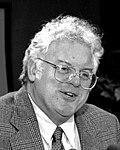
 United States of America
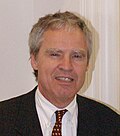
 Germany

United States of America
Explanation
Everything around us is made of tiny charged particles called electrons. Normally each electron always carries exactly the same amount of charge, −1 in the chosen units. Robert Laughlin and his colleagues found that when electrons are cooled and squeezed into an extremely thin sheet while a very strong magnet is applied, the electrons join together to form a special "quantum liquid." In this liquid, the ripples—like waves on water—seem to carry only one-third or one-fifth of the electron’s charge. In other words, a charge that was thought to be indivisible appears to split when the electrons cooperate. This surprising behavior does not just reveal a new wonder of nature; it also gives clues for future electronic devices and quantum computers.
Related Keywords
Fractional Quantum Hall Effect
The Fractional Quantum Hall Effect (FQHE) is the quantization of Hall resistance at fractional multiples of e^2/h in a two-dimensional electron gas under strong magnetic fields. Dominant electron-electron interactions make the carriers condense into a novel quantum fluid. Crucially, the excitations emerge as quasiparticles carrying fractional charge ±e/m instead of integer multiples of e. The FQHE provided the first solid-state example of topological order and experimental evidence for anyons. It has inspired theoretical frameworks such as the composite-fermion picture and Chern-Simons effective field theory and underpins proposals for topological quantum computation.
two-dimensional electron gas
A two-dimensional electron gas (2DEG) is formed when electrons are confined to motion in a plane, typically at a semiconductor heterojunction or interface. The quantum-well thickness is smaller than the electron de Broglie wavelength, freezing the out-of-plane degree of freedom. High-mobility samples minimize scattering, enabling clear observation of quantum interference and quantum Hall effects. Surface gates allow precise tuning of carrier density, making the 2DEG a standard platform for mesoscopic physics and quantum-information devices. All major FQHE experiments employ high-purity 2DEGs, and sample quality governs the richness of fractional sequences observed.
Landau level
Landau levels are discrete energy states that arise when charged particles execute cyclotron motion in a strong magnetic field. The energy spacing depends on an integer n, and the degeneracy is proportional to the magnetic flux density. In the quantum Hall effect, the filling or partial filling of Landau levels near the Fermi energy produces quantized resistance. In the FQHE, partially filled levels allow electron interactions to dominate, leading to correlated states described by Laughlin’s wavefunction. Landau-level physics underlies the link between topology and transport phenomena.
fractional charge
Fractional charge refers to an effective electric charge that is a rational fraction of the electron charge e. Quasiparticles in the FQHE carry values such as ±e/3 or ±e/5, measured directly via shot-noise and quantum point-contact experiments. The electron itself does not split; rather the collective excitation distributes part of the charge, a purely quantum-mechanical effect. The observation proves that physical quantities can be topologically quantized and supports the existence of anyons. Future control of fractionally charged quasiparticles may be harnessed in quantum circuits.
composite fermion
In composite-fermion theory, each electron binds 2p magnetic flux quanta to form a new quasiparticle that experiences an effective field B*. The FQHE then maps onto the Integer Quantum Hall Effect of composite fermions, explaining many fractional sequences such as ν=p/(2p±1). Composite fermions restructure Landau levels and even predict a compressible, Fermi-surface-like state at ν=1/2. Cyclotron mass of composite fermions has been measured via resonance scattering and surface acoustic waves, agreeing with theory. The concept provides a broad extension of Fermi-liquid ideas to strongly correlated quantum fluids.
topological order
Topological order is a form of quantum many-body order distinct from conventional symmetry breaking, characterized by non-local entanglement patterns. In the FQHE, the ground state is degenerate and protected by a topological invariant, the Hall conductance. Edge states emerge as robust one-dimensional channels through the bulk-edge correspondence. Topological order underpins anyonic statistics and fault-tolerant quantum operations and influences studies of high-Tc superconductors and quantum spin liquids. New measurable topological responses such as Hall viscosity and geometric phases have been proposed in condensed-matter experiments.
anyon
Anyons are particles allowed only in two dimensions whose exchange statistics yield a phase between the 0 of bosons and the π of fermions. Quasiparticles in the FQHE are Abelian anyons, and interferometric experiments are underway to measure their phase directly. Anyons are crucial for implementing topological qubits in quantum information. Non-Abelian anyons, possibly present in the ν=5/2 state, are intensely studied both theoretically and experimentally. Anyonic statistics is now a universal concept across two-dimensional topological materials.
Chern–Simons theory
Chern–Simons effective field theory, a (2+1)-dimensional gauge theory with a topological mass term, provides the long-wavelength description of the FQHE. Electromagnetic response and Hall conductance are quantized by the Chern–Simons coefficient, matching the topological invariant. The composite-fermion construction is implemented through CS gauge attachment of flux. Edge states can be viewed as boundary degrees of freedom of the CS field, embodying the bulk-edge correspondence. CS theory also underpins the mathematics of topological insulators, superconductors and non-local operators used in quantum computation.
gallium arsenide heterostructure
GaAs/AlGaAs heterostructures stack layers with different bandgaps to create a high-mobility 2DEG at their interface. The electron gas is spatially separated from ionized impurities, greatly reducing scattering. This exceptional quality enables observation of delicate fractional sequences in the FQHE. Molecular-beam epitaxy growth pushes sample mobilities above 3×10^7 cm^2/Vs. GaAs heterostructures are also widely used in nanodevices such as quantum dots and quantum point contacts.
shot-noise measurement
Shot noise is the current fluctuation arising from the discrete nature of charge carriers during tunneling. Because the noise power is proportional to the carrier charge q, it directly measures the fractional charge of FQHE quasiparticles. Experiments use quantum point contacts at tens of millikelvin and detect the low-frequency noise spectrum with ultra-sensitive amplifiers. Effective charges e/3 and e/5 obtained match theoretical predictions. Shot-noise techniques serve as probes of nonequilibrium quantum transport in superconducting junctions and chiral edge channels alike.