2023 Nobel Prize in Physics
Reason for Award
for experimental methods that generate attosecond pulses of light for the study of electron dynamics in matter
Laureates
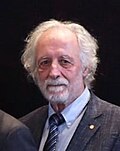
 United States of America
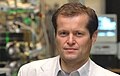
 Austria

 Sweden
Explanation
When we blink, it takes about 0.3 seconds. The 2023 Nobel laureates built a “light stopwatch” that is another billionth of a billionth shorter than a blink. With it, they can take pictures of electrons whizzing inside atoms. Electrons control how electricity flows and how light is emitted, so understanding their motion helps us design new computers or medicines. In short, the scientists invented a super-fast camera that lets us peek into an incredibly quick world.
Related Keywords
attosecond
One attosecond is 10⁻¹⁸ s, shorter than the time light needs to travel the width of a human hair. It matches the natural time scale of electron motion, allowing direct observation of bond breaking and recombination. Generating attosecond pulses requires Fourier synthesis of phase-locked high harmonics. Techniques such as RABBITT or stereo-photoionization provide sub-10 as timing resolution. Researchers are already exploring extensions toward the zeptosecond (10⁻²¹ s) domain.
high-harmonic generation
In HHG, intense laser fields drive atoms to emit odd-order harmonics of the fundamental frequency. The three-step model—tunnel ionization, acceleration, recombination—explains the process, with XUV photons released upon recombination. The spectrum shows a plateau; its cutoff scales as 3.17 Up + I_p. Phase-matching and gas-pressure tuning make HHG a versatile tabletop XUV source. Solid-state and plasma-mirror HHG are active derivative fields.
ultrafast laser
Ultrafast lasers emit pulses in the femtosecond-to-attosecond range; Ti:sapphire and mid-IR OPAs are common examples. CEP stabilization is essential for attosecond generation. They probe nonequilibrium dynamics and early phase-transition steps in materials. The high energy density also serves strong-field physics and precision micromachining. Future scaling to high average power will open broader industrial applications.
electron dynamics
Electron dynamics refers to the time evolution of electronic wavefunctions in atoms, molecules, and solids, including charge migration, recombination, and relaxation. Attosecond spectroscopy enables tracking these processes with sub-femtosecond resolution. Insights directly inform photochemical design and quantum-device engineering. In theory, real-time TDDFT is a popular tool for modeling such dynamics.
time-resolved spectroscopy
Time-resolved spectroscopy excites a system with a pump pulse and probes it after a controlled delay, yielding dynamic snapshots. Attosecond-level delay control reveals electron escape times and interaction-energy shifts. It is the only experimental means to directly capture transition states along reaction coordinates. Multi-wavelength schemes such as XUV pump–IR probe add element specificity and orbital resolution. Applications span condensed matter, chemistry, and biomolecules.
photoionization
Photoionization ejects electrons from atoms or molecules via photon absorption, extending Einstein’s photoelectric effect. Attosecond-resolved measurements reveal tiny emission time differences between orbitals. These data test time-dependent electron correlation and screening effects experimentally. Photoionization delays are extracted with RABBITT or streaking techniques. The results feed into atomic databases and plasma-physics modeling.
pulse train
A pulse train is a sequence of equally spaced attosecond bursts. It forms naturally from high-harmonic interference, with spacing roughly half the driving-laser period. Agostini’s RABBITT scheme determines intra-train phase differences to characterize timing. Pulse trains offer high photon flux, useful for multi-shot pump–probe experiments. Phase-matched trains coherently excite solid targets for spectroscopy.
carrier-envelope phase control
CEP control stabilizes the phase difference between a laser pulse’s envelope and its carrier wave. For near-single-cycle pulses, CEP fixes the timing of electric-field maxima, dictating attosecond-generation efficiency and waveform. Using f–2f interferometers and frequency combs, stabilization to tens of milliradians is achievable. Krausz’s group used CEP control to create a 650 as isolated pulse. CEP is also vital in quantum control and THz generation.