1911 Nobel Prize in Physiology or Medicine
Reason for Award
for his work on the dioptrics of the eye
Laureates
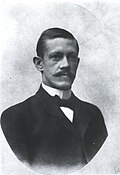
 Sweden
Explanation
When we look at something, transparent lenses called the cornea and the crystalline lens bend light inside our eyes. They steer the light so that a sharp image forms on the retina. Allvar Gullstrand carefully measured this bending, called refraction, and explained why people become nearsighted or farsighted. Thanks to his work, eye tests and eyeglasses can be made much more accurate.
Related Keywords
refraction
Refraction is the change in direction that light undergoes when it passes between media with different refractive indices. In the eye, the cornea and crystalline lens provide most of the refractive power and enable image formation on the retina. The amount of bending depends on refractive index and surface curvature; mismatches lead to myopia or hyperopia. Gullstrand measured ocular refractive elements with high precision and incorporated them into theoretical models. Understanding refraction underpins spectacles, contact lenses, and corneal surgery.
crystalline lens
The crystalline lens is an elastic, transparent tissue inside the eye that supplies significant refractive power after the cornea. With aging it hardens and loses accommodative ability, causing presbyopia. Gullstrand analyzed the curvature of the lens surfaces and its internal gradient index in great detail and integrated these parameters into his optical models. His data are still referenced as a starting point for intraocular-lens design. Lens research supports advances in cataract surgery and refractive correction.
accommodation
Accommodation is the physiological mechanism that changes the shape of the crystalline lens to focus on objects at different distances. Contraction of the ciliary muscle steepens the anterior lens surface, increasing refractive power. Gullstrand simultaneously measured curvature changes and posterior lens shifts during accommodation and revised existing models. Understanding accommodation is vital for developing multifocal and accommodating IOLs to treat presbyopia. Measurement of accommodative function is also used to assess myopia progression in children.
Gullstrand schematic eye
The Gullstrand schematic eye is a precise optical model consisting of six refracting surfaces and seven media, incorporating the negative power of the posterior cornea and the gradient index of the lens. It allows exact calculation of principal points, nodal points, and focal points, forming the theoretical basis for spectacle and IOL power calculation. It is widely adopted as a standard reference in wavefront analysis and visual-quality assessment. Simplified versions by Emsley and Le Grand followed, but the original remains highly influential. It is a classic yet practical design that underpins clinical theory.
slit lamp
The slit lamp is an anterior-segment microscope developed by Gullstrand. By projecting a narrow slit of light obliquely onto the cornea or lens, it visualizes minute opacities and injuries with high contrast. In modern ophthalmology it is an indispensable diagnostic tool, often combined with intraocular-pressure tonometry or fluorescein staining. Its optical design uses aplanatic objectives and coaxial illumination, providing both high resolution and ease of use. Applications include pre-operative corneal evaluation and cataract nuclear grading.
refractive error
A refractive error occurs when the eye’s optical system fails to focus images precisely on the retina; it includes myopia, hyperopia, astigmatism, and presbyopia. Causes range from imbalance between axial length and refractive power to asymmetry in corneal curvature. The Gullstrand model formalizes these factors and provides an objective basis for prescribing spectacles and contact lenses. Refractive errors affect more than half of the global population, and improving correction accuracy directly enhances quality of life. Research on refractive errors has broad implications for public health, education, and economic productivity.