1920 Nobel Prize in Physiology or Medicine
Reason for Award
for his discovery of the capillary motor regulating mechanism
Laureates
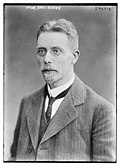
 Denmark
Explanation
Inside our bodies, blood does not travel only through big vessels but also through very tiny tubes called capillaries. Capillaries are thinner than a hair and carry oxygen and nutrients to every corner of the body. August Krogh discovered that capillaries can open and close as needed, adjusting how much blood they let through. It is like turning a water tap to make the flow stronger or weaker. Thanks to this system, more blood reaches muscles when you run, while during rest the flow is reduced so the body saves energy.
Related Keywords
capillary
Capillaries are extremely narrow blood vessels about 5–10 µm in diameter, allowing red blood cells to pass in single file. Through their thin endothelial wall, gases, nutrients, and metabolic waste are exchanged between blood and tissue. Their total length in the human body is estimated to exceed 100,000 km, making them the primary interface between circulation and cells. Perfusion rates vary with metabolic demand; as Krogh demonstrated, capillaries possess a dynamic open-and-close mechanism. Functional or structural capillary defects are implicated in diseases such as diabetic microangiopathy and tumor angiogenesis.
microcirculation
Microcirculation consists of arterioles, capillaries, and venules and represents the final regulatory segment of blood pressure and tissue perfusion. It is the principal site of exchange for oxygen, nutrients, and metabolic by-products between blood and cells. Flow velocity and vessel caliber change within seconds under the influence of autonomic nerves, hormones, and local metabolites. Microcirculatory failure contributes to organ dysfunction in acute conditions such as shock, sepsis, and stroke. Krogh’s work founded the concept of microcirculation and ultimately led to modern clinical assessment tools like sidestream dark-field imaging.
vasomotion
Vasomotion refers to the rhythmic contraction and relaxation of arterioles and capillaries. These cyclic diameter changes modulate local blood flow in a pulsatile manner, improving oxygen delivery efficiency. Krogh was the first to quantify vasomotion in frog tongue and auricle, demonstrating its dependency on metabolic activity. Vasomotion is synchronously regulated by nitric oxide, calcium sparks, membrane potential oscillations, and other intracellular signals. Abnormal vasomotion has been reported in hypertension, diabetes, and Alzheimer’s disease, making it an active biomarker of vascular health.
precapillary sphincter
The precapillary sphincter is a ring-like smooth-muscle structure located at the junction of arterioles and capillaries. When the sphincter contracts, blood flow into the capillary is halted; when it relaxes, flow resumes, acting as a valve for individual capillaries. Krogh observed the behavior of this site and proposed that it is locally regulated by metabolites from surrounding tissue. Modern high-resolution imaging has shown that sphincters respond to neural and endothelial signals on a millisecond time scale. Dysfunction of precapillary sphincters contributes to diverse pathologies such as cerebral ischemia, retinopathy, and tumor vascular anomalies.
oxygen diffusion
Oxygen diffusion is the physical process by which O2 molecules move randomly from a region of high concentration (blood) to one of lower concentration (tissue). The rate of diffusion depends on the concentration gradient, distance, temperature, and tissue diffusion coefficient. Krogh’s model mathematically defined conditions under which diffusion becomes the rate-limiting step in oxygen supply and derived a critical diffusion distance. In sports science and high-altitude physiology, enhanced diffusive capacity is directly linked to performance. In tumors, extended diffusion distances create chronic hypoxia, contributing to resistance to radiotherapy.
Krogh cylinder model
The Krogh cylinder model imagines a single capillary as the central axis of a cylindrical tissue domain and analyzes oxygen diffusion and consumption mathematically. By solving the steady-state oxygen concentration profile, the model yields a critical radius beyond which tissue becomes hypoxic if not supplied by another vessel. This simple geometric abstraction approximates complex oxygen dynamics in multicellular tissues and is widely used from basic physiology to oncology. Subsequent numerical work has refined the model by adding time dependence and anisotropic diffusion parameters. Today, organ-on-a-chip bioengineering platforms employ the model as a guideline for optimal capillary spacing.
tissue metabolic demand
Tissue metabolic demand refers to the amount of oxygen and nutrients a tissue requires to sustain its activity. Demand increases during exercise or fever and decreases during rest or exposure to cold. Krogh hypothesized that changes in metabolic demand directly drive the opening and closing of capillaries. Recent studies show that cellular sensors such as AMPK and HIF-1α link to vascular tone to match demand and supply. Imbalance between metabolic demand and blood flow modulates the severity of ischemia-reperfusion injury and mitochondrial diseases.