1933 Nobel Prize in Physiology or Medicine
Reason for Award
for his discoveries concerning the role played by the chromosome in heredity
Laureates
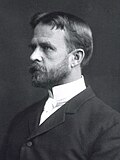
 United States of America
Explanation
Inside our bodies are cells, and inside those cells are tiny thread-like things called chromosomes. Using a small fly named Drosophila, Dr. Morgan showed that traits such as eye color are carried by genes located on these chromosomes and passed from parents to children. It is like a treasure map: the information is stored at fixed spots on the chromosome. Thanks to his work we know why family members resemble one another. Today this idea helps doctors study diseases and farmers breed better crops.
Related Keywords
chromosome
Chromosomes are thread-like structures made of DNA and protein that physically carry an organism’s genetic information inside the nucleus. Humans possess 46 chromosomes, fruit flies 8, and the number and morphology vary by species. During cell division they condense and can be seen under a microscope, and their motion parallels the segregation of genes. Thousands of genes are arranged linearly along each chromosome, which also contains specialized regions such as centromeres and telomeres. Deletions, duplications, or translocations of chromosomes cause developmental disorders and cancers, making them key subjects in medical research.
gene
A gene is the fundamental DNA sequence unit that determines a specific trait, usually by being transcribed and translated into an RNA or protein product. In Morgan’s era genes were abstract 'factors', but modern genomics has resolved their precise nucleotide sequences. Genes consist of promoters, exons, introns and other functional segments, and their transcription is intricately regulated. Mutations can alter phenotype or cause disease. Tools such as CRISPR now allow targeted modification of genes, expanding applications in medicine and agriculture.
Drosophila melanogaster
Drosophila melanogaster is a 3-mm long insect whose short generation time and high offspring numbers make it an ideal genetic model organism. Morgan used this fly to establish the principles of sex linkage and linkage analysis. Its entire genome has been sequenced, and extensive knockout lines are available. Roughly 60 % of its genes have human counterparts, so it is valuable for studies of development and neuroscience. Easy and inexpensive husbandry keeps it a staple in research and teaching worldwide.
sex chromosome
Sex chromosomes are specialized chromosomes that determine biological sex; in humans and in fruit flies they are designated X and Y. Morgan showed that the white-eye mutation resides on the X chromosome, introducing the concept of sex linkage. Unlike autosomes, sex chromosomes have distinctive recombination rates and gene densities, exhibiting evolutionary phenomena such as degeneration and dosage compensation. Mechanisms like X-chromosome inactivation in females or Y-chromosome shrinkage fascinate developmental and evolutionary biologists. Abnormalities in sex chromosomes lead to disorders such as Turner syndrome and Klinefelter syndrome.
linkage
Linkage refers to the tendency of genes located on the same chromosome to be inherited together. Morgan observed characters that did not segregate independently and coined the concept of linkage. The strength of linkage depends on physical distance: the closer two genes are, the less often crossing-over separates them. This property enabled the construction of genetic maps. Even today, linkage information underlies pedigree analyses and genome-wide association studies for disease gene discovery.
crossing-over
Crossing-over is the exchange of genetic material between homologous chromosomes during meiosis, partially breaking linkage. Morgan’s quantification of recombination frequencies provided the first strong evidence for crossing-over. The process produces new allele combinations and thus genetic diversity. At the molecular level it involves DNA double-strand breaks and repair, passing through a Holliday junction intermediate. Abnormal crossover rates can lead to infertility or chromosomal disorders.
genetic map
A genetic map depicts the relative positions of genes on a chromosome, with distances defined by recombination frequency. Sturtevant introduced the centimorgan unit and built the first map in Morgan’s laboratory. Before physical maps and genome sequencing, genetic maps were the primary navigation tool in genetics. They remain useful in QTL mapping and marker-assisted selection. When combined with molecular markers they enhance the precision of breeding and medical applications.
Mendelian inheritance
Mendelian inheritance comprises Gregor Mendel’s fundamental laws of segregation and independent assortment. Morgan connected Mendelian patterns to the physical behavior of chromosomes, completing the framework of modern genetics. Mendelian principles are essential for understanding single-gene diseases. They are applied in pedigree analysis and genetic diagnosis today. Even studies of complex traits and polygenic disorders still refer back to Mendelian concepts.
allele
An allele is an alternative version of a gene at the same locus that contributes to phenotypic diversity. The white-eye and red-eye forms in Drosophila are alleles of the w gene. Morgan’s crosses clarified how phenotypic differences relate to specific alleles. Dominance and recessiveness relationships between alleles underpin Mendel’s laws. Today allele frequencies are key metrics in population genetics and evolutionary studies.
genetics
Genetics is the branch of biology that studies the structure, transmission and variation of genetic information, and Morgan’s achievements helped establish it as an experimental science. It has evolved from classical genetics to molecular genetics and genomics, with wide applications from medicine to agriculture. Rapid advances in DNA sequencing have expanded research from single genes to whole genomes. Genetics is now a lingua franca across disciplines such as evolution, development and neuroscience. It also raises ethical and social issues that require interdisciplinary discussion.