1935 Nobel Prize in Physiology or Medicine
Reason for Award
for his discovery of the organizer effect in embryonic development
Laureates
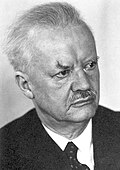
 Greater German Reich
Explanation
Living things start as tiny eggs where many cells gather to build a body. Hans Spemann studied newt eggs and found a small area that works like a “director.” This spot sends signals telling nearby cells, “You become the head” or “You become the spine.” When he moved that spot to another egg, a second body began to form. This showed that some cells guide others and create the body’s blueprint. The discovery gave us a big clue about how our bodies grow in exactly the right shape.
Related Keywords
embryonic induction
A phenomenon in which one embryonic tissue determines the fate of neighboring undifferentiated cells. The concept was established by Spemann’s transplantation experiments. Secreted signaling molecules interact with receptors and change gene expression. Induction operates in neural-plate formation, organ positioning, and many other developmental events. Regenerative medicine and organoid technology now try to recreate induction artificially.
organizer (Spemann-Mangold organizer)
An embryonic tissue centered on the dorsal lip capable of inducing a secondary axis. It secretes BMP and Wnt antagonists, promoting dorsalization and neuralization. Transcription factors like Goosecoid serve as markers. Analogous structures exist in amphibians, fish, and mammals, indicating evolutionary conservation. Modern developmental biology regards the organizer as a key driver of self-patterning.
dorsal lip of the blastopore
A dorsal region in amphibian gastrula where the first involuting cells enter the embryo. It is the tissue Spemann transplanted and forms the core of the organizer. Mesoderm and notochord cells migrate from this site over the endoderm, laying down the body axis. Localized β-catenin activity is essential for dorsal-lip initiation. Xenopus laevis serves as a prime model for studying this structure.
cell differentiation
The process by which genetically identical cells become specialized, such as neurons or muscle cells. Induction is a major external mechanism controlling differentiation paths. Epigenetic modifications and transcription-regulatory networks are involved. Failure of proper differentiation causes cancer and congenital disorders. Knowledge of induced differentiation underpins stem-cell therapy and tissue engineering.
morphogenesis
The generation of three-dimensional organs and body shapes through coordinated cell proliferation, movement, and differentiation. Mechanical stresses and cytoskeletal remodeling are as important as chemical signals. Induction sets up initial positional cues in morphogenesis. Computational models use reaction–diffusion equations and vertex-based mechanics. Measurement of morphogen gradients is advancing rapidly with cutting-edge imaging techniques.
developmental biology
A discipline that studies life processes from fertilization to adult formation along a time axis. Spemann’s work bridged experimental embryology and molecular developmental biology. Model organisms such as zebrafish, mice, and Drosophila are widely used. The field is closely linked to regenerative medicine and evolutionary biology, and aids drug-target discovery. Single-cell profiling and AI-based image analysis now enable high-resolution reconstruction of cell-fate maps.