1937 Nobel Prize in Physiology or Medicine
Reason for Award
for his discoveries in connection with the biological combustion processes, with special reference to vitamin C and the catalysis of fumaric acid
Laureates
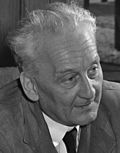
 Kingdom of Hungary
Explanation
Our bodies make energy by “burning” the food we eat deep inside tiny cells. Albert Szent-Györgyi wanted to know how this invisible fire works, so he took vitamin C out of vegetables like paprika. Vitamin C is the sour stuff in lemons and it stops our bodies from getting rusty. He discovered that vitamin C helps the burning reaction run smoothly. He also found that another chemical called fumaric acid acts like a helper that makes the reaction go faster. Thanks to these findings we know better how to stay healthy and full of energy.
Related Keywords
Vitamin C
Vitamin C (ascorbic acid) is a water-soluble vitamin that humans cannot synthesize and must obtain from diet. Albert Szent-Györgyi extracted it in bulk from paprika in the 1930s and proved it to be the antiscorbutic factor. The molecule has an enediol structure that gives it strong reducing power, allowing it to quench reactive oxygen species as an antioxidant. It is indispensable as a co-factor for prolyl and lysyl hydroxylases in collagen biosynthesis. Additional functions include enhancement of iron absorption and modulation of immune-cell activity, making it a central marker in clinical nutrition. Recently, pharmacological high-dose vitamin C has been explored as adjuvant therapy for cancer and infections, reviving interest in the link between energy metabolism and oxidative stress.
Biological combustion process
The term “biological combustion” (cellular respiration) refers to the stepwise oxidation of carbohydrates and lipids with oxygen to store energy as ATP. Unlike open burning, the process is mediated by enzymes, allowing cells to harvest large amounts of energy under mild conditions without damage. The pathways of glycolysis, the citric-acid cycle, and the electron-transport chain act in concert, producing water and carbon dioxide. In the 1930s Szent-Györgyi combined manometry with colorimetric assays to quantify reaction rates and demonstrated regeneration of intermediates. He thus introduced the idea that compounds such as fumaric acid cycle catalytically, closing the metabolic loop. Understanding this process now underpins diagnostics for metabolic diseases, sports physiology, and bioenergy research.
Citric acid cycle
The citric acid cycle (TCA or Krebs cycle) oxidizes acetyl-CoA completely and produces large amounts of reducing equivalents (NADH, FADH2). Between the 1920s and 1930s Szent-Györgyi and Hans Krebs identified the intermediates sequentially and unveiled the looped pathway. More than eight organic acids—citrate, isocitrate, α-ketoglutarate, and others—are processed by consecutive enzymes. The NADH and FADH2 generated feed electrons into the respiratory chain, driving ATP synthesis via oxidative phosphorylation. The cycle intersects with amino-acid and fatty-acid metabolism, functioning as a central hub of biochemical networks. Enzyme deficiencies are implicated in cancer and neurodegeneration, making the pathway a key drug-discovery target.
Fumaric acid
Fumaric acid is an unsaturated dicarboxylic acid in the TCA cycle and is produced by dehydration of succinate. Szent-Györgyi provided evidence that fumarate is not merely a product but is recycled catalytically, supporting the idea of a closed metabolic loop. Fumarate is hydrated by fumarase to malate, sustaining the flow toward oxaloacetate. Pharmacologically, dimethyl fumarate is an approved drug for multiple sclerosis, highlighting the compound’s immunomodulatory properties. In hereditary leiomyomatosis and renal-cell cancer, fumarate accumulation acts as a metabolic onco-gene. Chemically it adopts a trans configuration and is used in synthetic chemistry and as a food additive.
Catalysis
Catalysis refers to the phenomenon in which reaction rates are increased without altering equilibrium, and in living systems enzymes perform this task. Szent-Györgyi demonstrated that small molecules such as vitamin C and fumarate can act cooperatively with enzymes, broadening the co-enzyme concept. Catalysts lower activation energy and flatten the energy landscape between substrate and product. Modern chemistry designs metal complexes and organocatalysts to mimic biological catalysts. Physiologically, fine-tuning of catalytic efficiency sets metabolic flux control points, and disease can arise when this balance is disturbed. Understanding catalysis underpins green chemistry initiatives and the engineering of bioreactors.
Antiscorbutic factor
The antiscorbutic factor is the nutrient that prevents or cures scurvy and was long unknown. During the Age of Sail, lemons and limes were provided empirically by ship surgeons to ward off the disease. Using a guinea-pig model Szent-Györgyi quantified the protective effect of his extracts and succeeded in identifying the responsible compound. This discovery led to the naming of vitamin C and catalyzed the systematization of vitamin science. Today intravenous and supplemental vitamin C is administered to aid postoperative recovery and pressure-ulcer healing. Identification of the antiscorbutic factor marked a turning point in establishing causal links between nutrient deficiency and disease.
Redox reaction
Redox reactions involve the transfer of electrons and lie at the heart of bioenergetics. In cellular respiration the NAD⁺/NADH and FAD/FADH2 couples act as primary electron carriers, feeding electrons into the transport chain to drive ATP synthesis. Szent-Györgyi used ascorbic acid as a model to show that small molecules can enter the redox network as electron donors. He refined methods to measure redox potentials and mapped the energy gradients between intermediates with high precision. Disruption of redox balance is observed in cancer, diabetes, and neurodegenerative diseases, making it a therapeutic target. In metabolic engineering, optimizing cellular redox state is pursued to enhance bioproduction efficiency.
Electron transport chain
The electron transport chain (ETC) resides in the inner mitochondrial membrane and comprises complexes I–IV and ATP synthase. Electrons from NADH and FADH2 are passed to oxygen, generating a proton gradient that drives ATP synthesis in the process called oxidative phosphorylation. Szent-Györgyi’s work was at the pre-ETC stage; by measuring redox states of intermediates he provided early evidence of directed electron flow. Peter Mitchell later proposed the chemiosmotic theory, clarifying the energy-conversion mechanism of the ETC. Inhibitors of the chain serve as pesticides and antibiotics, but they also cause mitochondrial toxicity, posing challenges for drug design. Gene therapy for complex deficiencies and pharmacological activators are under active investigation.
Succinate dehydrogenase
Succinate dehydrogenase (SDH, complex II) is a flavoprotein complex that links the TCA cycle and the electron transport chain. Szent-Györgyi measured SDH activity and showed that the conversion of succinate to fumarate is FAD-dependent. SDH is anchored in the membrane, allowing the resulting FADH2 to deliver electrons directly into the chain. Loss-of-function mutations in SDH cause tumors such as paragangliomas, illustrating a direct connection between metabolism and oncogenesis. SDH inhibitors are used as agricultural fungicides, spurring development of highly selective compounds. Structural studies have revealed iron-sulfur clusters and heme groups arranged as an electron tunnel within the enzyme.
Flavoprotein
Flavoproteins are enzymes that contain riboflavin-derived FAD or FMN as cofactors and catalyze redox reactions. Szent-Györgyi suggested that a flavin cofactor resides at the active site of succinate dehydrogenase, mediating electron transfer. More than a few hundred flavoproteins are known, participating in fatty-acid oxidation, DNA repair, photoreception, and other processes. FAD absorbs visible light and appears yellow, making it a classic spectroscopic probe in metabolic studies. Hereditary flavin deficiencies cause disorders of lipid metabolism and neurological symptoms, underscoring nutritional importance. Engineered flavoproteins are applied in biocatalysis and bio-illumination devices.