1948 Nobel Prize in Physiology or Medicine
Reason for Award
for his discovery of the high efficiency of DDT as a contact poison against several arthropods
Laureates
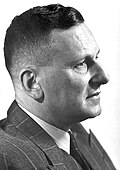
 Switzerland
Explanation
Long ago, many people died from diseases carried by insects like mosquitoes and flies. Swiss scientist Paul Müller studied a white powder called DDT. He discovered that when insects simply touched the powder, they quickly became weak and died. Even better, the powder stayed on walls and nets for a long time, so it could kill insects again and again. Thanks to this discovery, outbreaks of malaria and typhus could be greatly reduced. That is why Mr. Müller received the Nobel Prize.
Related Keywords
DDT
DDT is an organochlorine insecticide synthesized from chlorobenzene and chloral. After Müller reported its insecticidal properties in 1939, it spread rapidly in both public health and agriculture. It delivers lethal effects to many insect species at low concentrations, revolutionizing the control of malaria vectors. Because of its high lipophilicity and slow degradation, it was later found to persist in soils and organisms for long periods. From the 1970s, many countries banned or restricted agricultural use, although public-health exemptions still exist in some regions. Today DDT is studied as a symbol of both historical success and environmental controversy.
contact poison
A contact poison is an insecticide that exerts its toxicity simply when an insect touches the chemical. Because ingestion is not required, pests can be eliminated even in unhygienic environments where bait systems fail. DDT is a hallmark contact poison, penetrating the insect cuticle and acting on the nervous system. This mechanism allowed long-lasting control by treating indoor walls or bed nets rather than food sources. At the same time, humans and mammals may encounter the powder directly, so careful handling is necessary. Modern insecticide research still focuses on optimizing dermal absorption and selective toxicity.
residual activity
Residual activity refers to the ability of a compound to remain effective in the environment after a single application. DDT exhibits high residual activity, killing insects for weeks to months after spraying. This long-term effect reduces the need for frequent re-application, making vector control cost-efficient in low-income settings. The same persistence, however, leads to environmental residues and biomagnification through food chains. Current WHO guidelines aim to balance efficacy with ecological safety by evaluating both aspects. Studies on residual activity inform modern developments such as nanoparticle formulations and slow-release matrices.
malaria
Malaria is a parasitic infection transmitted by Anopheles mosquitoes and claims hundreds of thousands of lives each year. The introduction of DDT rapidly reduced mosquito populations and dramatically lowered malaria incidence in many areas during the 1940s-1960s. Indoor residual spraying was a cornerstone of the WHO’s malaria eradication campaign. Nevertheless, DDT-resistant mosquitoes and sociopolitical factors prevented universal success. DDT is still used in limited cases, but modern strategies integrate other insecticides, vaccines, and gene-drive technologies. The history of malaria control underscores the importance of balancing scientific, policy, environmental, and ethical considerations.
arthropods
Arthropods comprise insects, spiders, mites, and crustaceans characterized by an exoskeleton and jointed limbs. From a public-health standpoint, mosquitoes, flies, lice, fleas, and ticks act as vectors that transmit pathogens to humans. Müller’s work was the first to demonstrate a chemical with high efficacy across multiple arthropod taxa. As a contact poison, DDT targets neural components common to many arthropods, enabling broad application. Subsequent research identified detoxifying enzymes and resistance genes that differ among species, highlighting the need for selective control. Arthropod science now integrates molecular genetics and ecology and is indispensable for developing vector-control strategies.