1958 Nobel Prize in Physiology or Medicine(1)
Reason for Award
for their discovery that genes act by regulating definite chemical events
Laureates
 United States of America
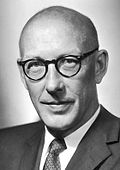
United States of America
Explanation
Inside our bodies and in plants, tiny “chemical factories” work all the time, turning food into energy and building blocks. George Beadle and Edward Tatum studied how little instruction sheets called genes decide which helpers (enzymes) these factories make. They shone X-rays on a red bread mold called Neurospora to make special mutants with unusual growth. By seeing which vitamins or amino acids the injured molds needed from the outside, they learned which enzyme each mutant had lost. This led to the famous rule, “one gene makes one enzyme,” that you now find in science textbooks.
Related Keywords
gene
A gene is a unit of DNA sequence that encodes functional information. Before Beadle and Tatum, the precise activity of genes was speculative. Their experiments showed that genes specify the production of enzymes, proteins that catalyze reactions. This shifted genetics from abstract traits to concrete biochemical functions. Mutations in genes are now known to underlie inherited diseases and evolutionary change.
one gene–one enzyme hypothesis
The 'one gene–one enzyme' hypothesis states that each gene determines the structure of a single enzyme. It was formulated from Beadle and Tatum’s work with Neurospora mutants. When multi-subunit proteins were discovered, the idea was refined to 'one gene–one polypeptide'. Nevertheless, the core principle that genes direct protein synthesis remains intact. The hypothesis became a cornerstone for the central dogma of molecular biology.
metabolic pathway
A metabolic pathway is a series of stepwise chemical reactions occurring in living cells. Each step is catalyzed by a specific enzyme. Beadle and Tatum’s mutants demonstrated that blocking a single enzyme halts the entire pathway. The concept helps explain vitamin deficiencies and inherited metabolic disorders. Modern biotechnology harnesses engineered metabolic pathways to make biofuels and drugs.
Neurospora crassa
Neurospora crassa is a red bread mold belonging to the ascomycete fungi. Because it spends most of its life cycle in a haploid state, mutations show phenotypes immediately, facilitating genetics. Beadle and Tatum generated hundreds of mutants in this organism for their experiments. Neurospora later became a model for circadian rhythm, phototropism, and other studies. It grows on simple media, making it suitable for teaching laboratories.
auxotrophic mutant
An auxotrophic mutant cannot grow on minimal medium but grows when a specific nutrient is supplied. A gene mutation disrupts part of a biosynthetic pathway, forcing the organism to import the missing compound. Beadle and Tatum identified enzyme defects by analyzing the nutrient requirements of auxotrophs. Auxotrophic selection is widely used in bacterial and yeast genetics. Today, auxotrophies serve in biocontainment strategies and drug-screening assays.
metabolic block analysis
Metabolic block analysis identifies which step of a pathway is disrupted by examining the growth requirements of mutants. Supplying compounds upstream or downstream of the block helps infer the position of the missing enzyme. Beadle and Tatum pioneered the method, which became central to mapping biosynthetic pathways. Coupling the technique with radioisotopes or mass spectrometry allows detailed flux tracking. Today, it underpins systematic rewiring of metabolic networks in combination with genome editing.