1965 Nobel Prize in Physiology or Medicine
Reason for Award
for their discoveries concerning genetic control of enzyme and virus synthesis
Laureates
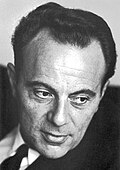
 France
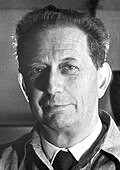
France
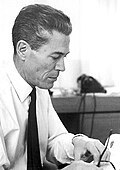
France
Explanation
Our bodies and microbes make tiny workers called enzymes that break down food and create energy inside cells. But cells are smart: they make enzymes only when needed and stop making them when not. François Jacob, André Lwoff, and Jacques Monod discovered that this on-off control is built right into the genes themselves. Studying E. coli, they showed that a protein called a “repressor” presses the genetic switch to block or allow enzyme production. Knowing this also explains why viruses can stay quiet inside a cell and then suddenly multiply, and it has become a cornerstone of modern medicine and biotechnology.
Related Keywords
Operon hypothesis
The operon hypothesis states that several structural genes in prokaryotes are grouped into a single transcription unit and expressed coordinately under shared regulatory elements. Proposed by Jacob and Monod while studying the lactose operon, it explains gene control in terms of a promoter, operator, and regulatory gene. This enables cells to conserve resources and respond quickly to environmental changes. The model was later applied to the tryptophan operon and others, establishing a universal mechanism of metabolic regulation. Today it serves as a theoretical pillar for designing artificial operons in synthetic biology.
Lac operon
The lactose operon in E. coli encodes β-galactosidase, permease, and transacetylase, enzymes required for lactose utilization. When lactose is absent, the Lac repressor binds the operator and blocks transcription. Presence of lactose or IPTG causes the repressor to detach, inducing transcription so the sugar can be metabolized as an energy source. The genes lacI, lacZ, lacY, and lacA are classic teaching tools in molecular genetics and are widely employed in blue-white screening and expression vector regulation. The lac operon remains a premier model for studying transcriptional control, allosteric regulation, and metabolic feedback.
Repressor protein
A repressor is a regulatory protein that binds DNA specifically and inhibits transcription. In the operon model, the repressor binds to the operator sequence and prevents RNA polymerase from initiating transcription. Most repressors are allosteric proteins whose DNA-binding affinity changes when an inducer or corepressor molecule binds. Iconic examples such as the LacI repressor and lambda CI repressor have been characterized structurally and serve as prototypes for gene regulation. The concept has been extended to eukaryotic transcriptional repressors and even to CRISPRi guide design, making repressors vital tools in biotechnology.
Lysogeny
Lysogeny is the state in which bacteriophage DNA integrates into the host bacterial chromosome and coexists passively. During this phase, most phage genes are repressed by a repressor protein, but environmental stress can trigger induction into the lytic cycle. Lwoff showed that ultraviolet light or chemicals can start this switch, uncovering how gene regulation responds to external signals. Lysogeny facilitates horizontal gene transfer, providing toxin genes and other traits that drive pathogen evolution. Today, it is also of interest in phage therapy and as genome editing vectors in synthetic biology.
Regulatory gene
A regulatory gene encodes an RNA or protein that controls the expression of other genes. In the lac operon, lacI acts as the regulatory gene that produces the Lac repressor, influencing transcription from a different locus. Such trans-acting action allows a diffusible signal to coordinate multiple operons simultaneously. In eukaryotes, transcription factors and miRNA genes perform analogous roles, building hierarchical gene networks. Mutations in regulatory genes often underlie severe diseases or act as cancer drivers, making them prominent drug targets.
Inducer
An inducer is a small molecule or metabolite that binds a repressor and lifts transcriptional repression. In the lac operon, lactose or IPTG serves as the inducer, allosterically altering the DNA-binding domain of the LacI repressor. The presence of an inducer informs the cell that the corresponding metabolite is plentiful in the environment, optimizing resource allocation. In biotechnology, inducer concentration and kinetics are quantitatively modeled to achieve precise gene expression control. Pharmacology likewise exploits allosteric modulation of ligand-dependent transcription factors for hormone and drug design.